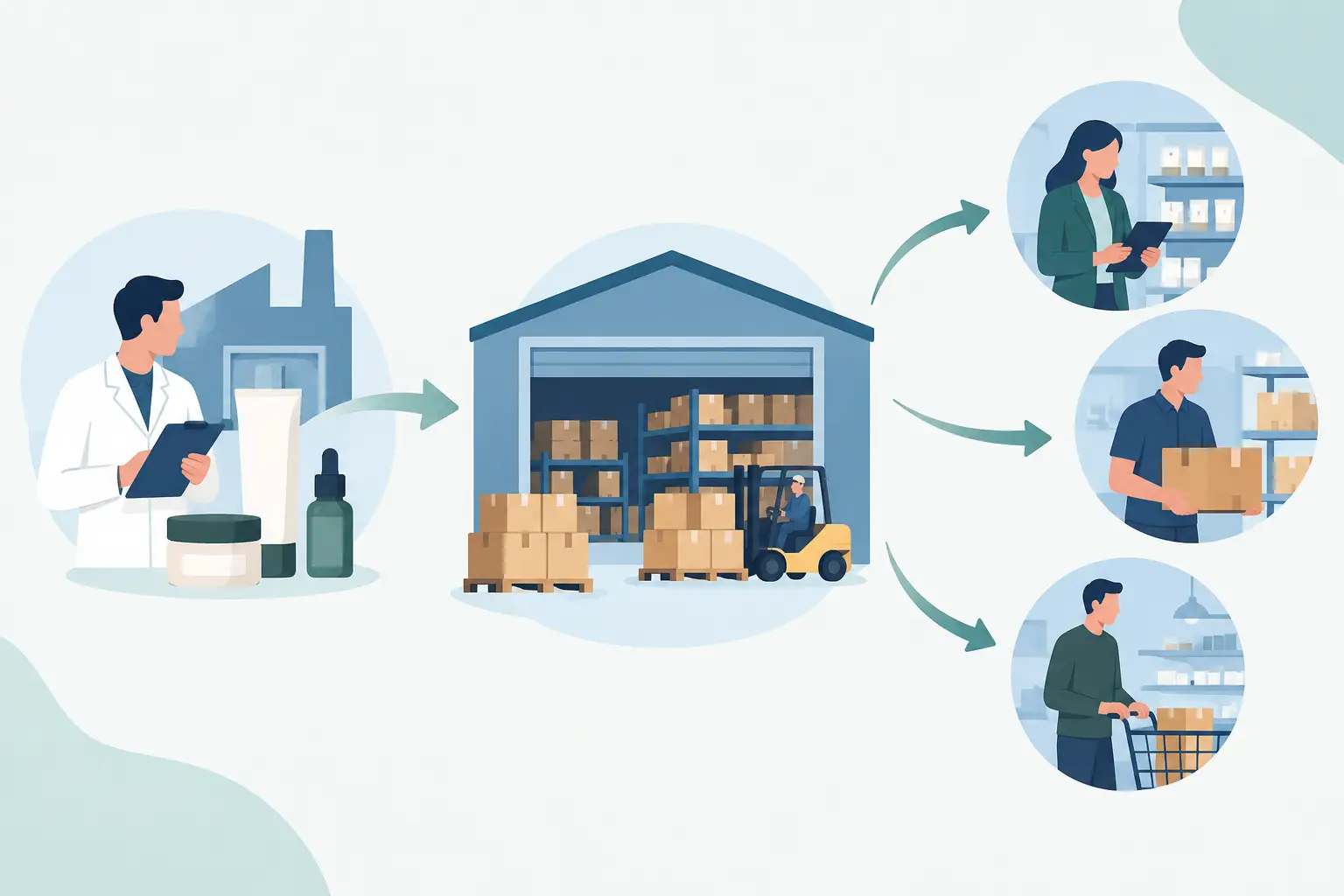

A delayed shipment in one category can disrupt an entire buying cycle. For wholesalers, distributors, retailers, and import-export businesses, the issue is rarely just price. It is coordination, stock consistency, product range, and the ability to place repeat orders without rebuilding the supply chain each time. That is why many growing businesses prefer a one stop wholesale supplier over managing multiple fragmented sources.
The appeal is straightforward. When a buyer can source household goods, kitchenware, cleaning products, baby items, stationery, tools, beauty products, and other fast-moving lines through one established trading partner, procurement becomes easier to control. The savings are not only found in unit cost. They appear in time, freight planning, administration, forecasting, and fewer supply gaps.
What a one stop wholesale supplier really provides
A one stop wholesale supplier is not simply a business with a large catalog. Product count alone does not solve procurement problems. The real value comes from combining assortment, dependable stock availability, competitive pricing, and the operational ability to support recurring volume orders across categories and markets.
For serious trade buyers, that distinction matters. Many suppliers can offer one or two strong categories. Fewer can support a mixed basket with consistent standards, commercial discipline, and export readiness. The difference becomes clear when buyers need regular replenishment, market-specific product mixes, or support for multiple resale channels.
This model is especially relevant in Dubai and other trade hubs where buyers often serve diverse customer bases across the UAE, Africa, Asia, Europe, and the Middle East. In these markets, demand can shift quickly. A supplier that can consolidate broad category purchasing into one relationship helps buyers respond faster without increasing sourcing complexity.
Why buyers move toward supplier consolidation
Procurement teams do not consolidate vendors because it sounds efficient on paper. They do it because unmanaged supplier networks create hidden costs. Every new vendor adds communication cycles, payment terms, lead time variables, documentation requirements, and quality control questions. Over time, those moving parts can slow down a business more than a slightly higher unit price ever would.
Working with a one stop wholesale supplier reduces this friction. Orders can be planned more strategically. Containers can be optimized across categories. Commercial discussions become simpler because the buyer is dealing with one accountable partner rather than several disconnected vendors. That matters when margins are tight and inventory timing affects sell-through.
There is also a relationship advantage. Long-term trading partnerships tend to produce better outcomes than one-off transactions. As order history grows, the supplier gains a clearer understanding of seasonal patterns, preferred categories, target price points, and regional demand behavior. That kind of familiarity improves decision-making on both sides.
The commercial benefits beyond price
Price remains important, but experienced buyers know that low pricing without supply reliability creates risk. A good wholesale partner supports margin protection in more than one way.
First, centralized sourcing lowers operational overhead. Instead of managing separate quotations, approvals, shipments, and follow-ups across multiple product vendors, buyers can streamline purchasing through one channel. This helps teams work faster and reduce administrative waste.
Second, a broader product portfolio creates room for basket-level purchasing decisions. If one category becomes price sensitive, buyers may still protect margin by balancing it against stronger positions in another category. That flexibility is harder to achieve when each category sits with a different supplier.
Third, stock continuity supports revenue continuity. Lost sales often come from stockouts, delayed replenishment, or inconsistent category coverage. A supplier with strong inventory depth and established sourcing networks is better positioned to support repeat business over time.
What to look for in a one stop wholesale supplier
Not every broad-line wholesaler offers the same level of value. Buyers should assess the supplier as a business platform, not just a product source.
Range is one factor, but it should be matched by category relevance. A large assortment only helps if the products align with the buyer’s market needs, whether that means everyday consumer goods, seasonal lines, branded merchandise, or private-label opportunities.
Supply consistency is equally important. If a supplier offers excellent pricing but cannot support reorder stability, the relationship will become difficult to scale. Buyers should look for operational depth, warehousing strength, and clear replenishment capability.
Commercial maturity matters as well. Established suppliers tend to offer better handling of export documentation, shipment coordination, payment structures, and account management. These are practical advantages that save time and reduce avoidable friction.
Finally, buyers should consider market understanding. A supplier with long experience across regional trade routes and customer segments can often advise on what moves, what slows, and where category opportunities are developing. That insight is valuable, especially for distributors and traders expanding into adjacent markets.
When one supplier is the better strategy and when it is not
A one stop model is highly effective for businesses that need breadth, continuity, and purchasing efficiency. It works well for resellers, retailers, and distributors serving mixed-demand markets where customers expect variety and regular stock movement.
It is also a strong fit for importers and exporters managing container economics. Consolidating multiple categories under one supplier can improve load planning and reduce the inefficiencies that come with partial sourcing from several vendors.
That said, it depends on the business model. Some buyers may still maintain specialized suppliers for highly technical or niche categories where certification, customization, or product-specific expertise is the primary requirement. In those cases, a one stop wholesale supplier may serve as the core procurement partner while specialist vendors support a smaller share of the range.
The most effective approach is often balanced rather than absolute. Centralize where scale, assortment, and repeat demand matter most. Use specialists where the category genuinely requires it.
Why scale and legacy still matter
In wholesale trade, experience is not only a branding point. It reflects buying power, supplier relationships, inventory planning discipline, and the ability to perform through market fluctuations. Businesses with long-standing trade infrastructure are often better equipped to manage volatility in freight, sourcing, and demand cycles.
Legacy also influences trust. Buyers placing large-volume orders need confidence that their supplier understands long-term account value, not just short-term transactions. A company with decades in wholesale, manufacturing, and distribution usually has systems and relationships that support stability at scale.
This is where established trading houses continue to hold an advantage. Their category breadth is supported by years of market access, brand relationships, in-house product development, and regional distribution experience. For buyers building repeat business, that foundation matters.
A practical advantage for regional and export buyers
For buyers sourcing from Dubai, the value of a strong wholesale hub is clear. The right supplier can serve domestic UAE demand while also supporting onward trade into Africa, Asia, Europe, and the Middle East. That combination is useful for businesses that operate across multiple territories or need flexibility in where goods are placed.
An experienced one stop wholesale supplier can also help buyers simplify procurement across business and consumer goods rather than sourcing each category separately. Fakhruddin General Trading operates in this space with a broad product portfolio, established regional relationships, and the infrastructure to support wholesale, distribution, manufacturing, and export trade at volume.
For many customers, the real advantage is not novelty. It is consistency. Reliable stock, competitive pricing, broad assortment, and a supplier that understands recurring commercial requirements make it easier to plan growth with confidence.
Choosing a partner, not just a catalog
A large assortment may attract initial attention, but long-term wholesale success depends on execution. Buyers should look for a supplier that can support repeat ordering, offer commercially sound pricing, maintain dependable stock, and understand the operational realities of regional trade.
When those pieces come together, sourcing becomes less reactive. Purchasing teams gain more control, distributors improve continuity, and retailers can widen assortment without multiplying risk. That is the real business case for choosing a one stop wholesale supplier.
The strongest supply relationships are built on reliability over time. When your supplier can grow with your categories, your markets, and your order volumes, procurement stops being a constant challenge and starts becoming a competitive advantage.