
A buyer reviewing a fast-moving category rarely asks a simple question. They are usually weighing shelf movement, customer trust, margin pressure, reorder speed, and market positioning at the same time. That is why the decision around private label vs branded products matters so much for wholesalers, distributors, and retailers working at scale.
For some businesses, established brands create faster sell-through and lower friction with end customers. For others, private label opens better margins, stronger control, and long-term brand equity. The right choice depends on your channel, customer base, and operating model.
Private label vs branded products: what is the real difference?
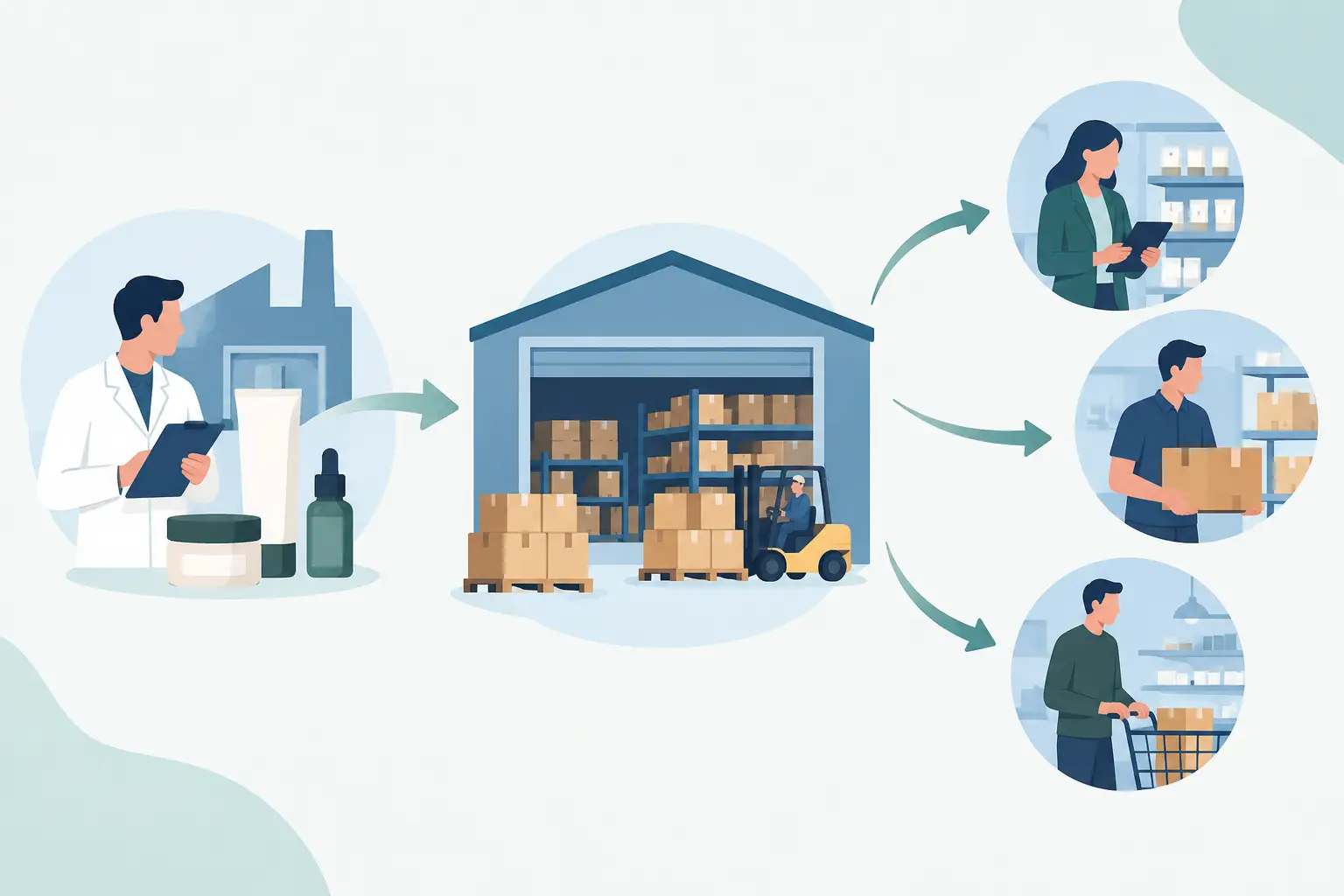
Private label products are manufactured by one company and sold under another company’s brand name. In wholesale and retail, this gives the buyer more ownership over positioning, pricing, packaging, and customer experience. It can be a strong fit for businesses building a distinct market identity or targeting value-conscious segments.
Branded products, by contrast, come to market under an established manufacturer or trademark owner. These products often benefit from consumer recognition, proven demand, and stronger trust at the point of sale. For distributors and retailers, that recognition can shorten the sales cycle and support consistent volume in categories where brand loyalty is already established.
The distinction seems straightforward, but commercially it goes deeper. Private label is not just about putting a new logo on a product. Branded supply is not just about carrying familiar names. Each option changes how you compete, how you price, and how much control you have over your assortment.
When branded products make better commercial sense
Branded products often perform well where the customer already associates quality, safety, or status with a known name. This is especially true in personal care, baby products, household consumables, and other categories where repeat buying is influenced by familiarity. If your buyers want recognized products and ask for them by name, branded supply can reduce resistance and support faster order conversion.
There is also a practical advantage in export and distribution markets. In many regions, established brands help open doors with retailers who prefer tested products over newer labels. A known brand can make assortment planning easier because demand is more predictable and promotional claims are already supported by market presence.
For procurement teams, branded products can also lower the burden of market education. You are not spending as much time explaining what the product is, why it is credible, or how it compares with alternatives. That matters when you are moving large volumes across multiple accounts and need dependable turnover.
Still, branded products come with trade-offs. Margins may be tighter, pricing flexibility is usually limited, and direct comparison with competing sellers is more common. If many wholesalers carry the same item, differentiation becomes harder. In that situation, service, stock availability, and delivery performance matter just as much as the product itself.
Where private label products create stronger upside
Private label products are often attractive because they give the buyer more control over margin structure. Without the premium of an established national or international brand, there is usually more room to set competitive pricing while protecting profitability. For traders serving price-sensitive markets, that can be a meaningful advantage.
Private label also creates room for exclusivity. If you own or control the label, customers cannot compare the exact product across every seller in the market. That helps reduce price-only competition and allows you to build loyalty around your own assortment rather than another company’s brand equity.
This model can be particularly effective in categories where the purchase decision is driven less by brand attachment and more by functionality, packaging value, or price point. Cleaning items, household goods, kitchenware, stationery, and selected general merchandise lines often offer strong private label potential when quality is consistent and stock is reliable.
Over time, private label can also strengthen your business strategically. Instead of building someone else’s market presence, you are creating your own. That may support stronger customer retention, better negotiating leverage, and a more defensible position in competitive channels.
The challenge is that private label requires more discipline. Quality control must be consistent. Packaging needs to be market-ready. Compliance, sourcing, forecasting, and replenishment all become more important because the reputation attached to the product is yours.
Margin, volume, and risk in private label vs branded products
The margin question is often where procurement discussions begin, but it should not be where they end. Private label may offer better per-unit profitability, yet that advantage only matters if the product moves consistently. A higher-margin item with slower turnover can tie up working capital and warehouse space.
Branded products may deliver lower margins, but their sales velocity can offset that difference. In high-demand categories, dependable volume and faster reorders may produce stronger overall returns than a slower-moving private label range. This is why experienced buyers evaluate gross margin alongside sell-through rate, inventory days, and repeat order behavior.
Risk also works differently in each model. With branded products, the supplier often carries much of the burden of market development. The demand already exists, and the product standard is clearer. With private label, you carry more responsibility for positioning and performance. If quality slips or packaging misses the market, the impact lands directly on your business.
For that reason, private label is strongest when supported by a dependable supply chain and a partner who can maintain consistency across production runs. In volume trading, inconsistency is expensive. It affects customer confidence, reorder patterns, and your standing in the market.
Choosing based on your channel and customer
There is no single answer that fits every buyer. A distributor selling into modern retail may need branded lines to satisfy store requirements and category expectations. A regional trader serving wholesale markets may find better results with a well-priced private label assortment. A retailer with a mixed customer base may need both.
The better question is not which model is superior in theory. It is which model matches your route to market.
If your customers ask for specific names, branded products are usually necessary. If they are focused on value and open to alternatives, private label can be a strong commercial tool. If you are expanding into a new market and want lower barriers to entry, branded products may help establish early traction. If you are trying to improve profitability and reduce direct price comparisons, private label may offer more control.
This is where category-level thinking matters. One business may choose branded baby care products, private label cleaning goods, and a mix in household essentials. That is often the most practical approach because buying behavior is not the same across every product line.
A blended strategy is often the strongest one
For many wholesale businesses, the most effective answer to private label vs branded products is not either-or. It is balance. Branded products can anchor credibility and traffic, while private label can improve margin and create exclusive value.
This approach gives buyers more flexibility in assortment planning. It allows you to serve accounts that want recognized names while also offering alternatives for customers who prioritize pricing. It also reduces dependence on a single model. If margin pressure rises on branded lines, private label can support profitability. If private label needs time to gain traction, branded products can maintain volume.
An experienced trading partner can make that strategy easier to execute by offering both breadth and reliability across categories. For businesses sourcing at scale, that matters as much as pricing. Consistent stock, product range, and dependable fulfillment help turn assortment strategy into repeat business.
What to evaluate before you commit
Before choosing one path or building a mixed portfolio, buyers should look closely at customer expectations, minimum order economics, packaging requirements, and replenishment speed. It is also worth assessing how much internal capacity you have for product development, quality monitoring, and brand building.
Private label can deliver strong long-term value, but only if it is supported properly. Branded supply can create dependable turnover, but only if pricing remains competitive and availability stays stable. In both cases, supplier reliability is not a secondary factor. It is central to performance.
Businesses that grow steadily in wholesale usually make this decision with discipline rather than preference. They study category behavior, test demand, and build assortments that reflect how their customers actually buy. In a market shaped by competition, pricing pressure, and fast-moving demand, that practical approach tends to outperform rigid thinking.
For companies sourcing across multiple categories, the smart move is often to treat product strategy as a portfolio decision. Choose branded lines where recognition drives demand. Build private label where margin, exclusivity, and control can create a stronger commercial position. Over time, that balance can support both resilience and growth.