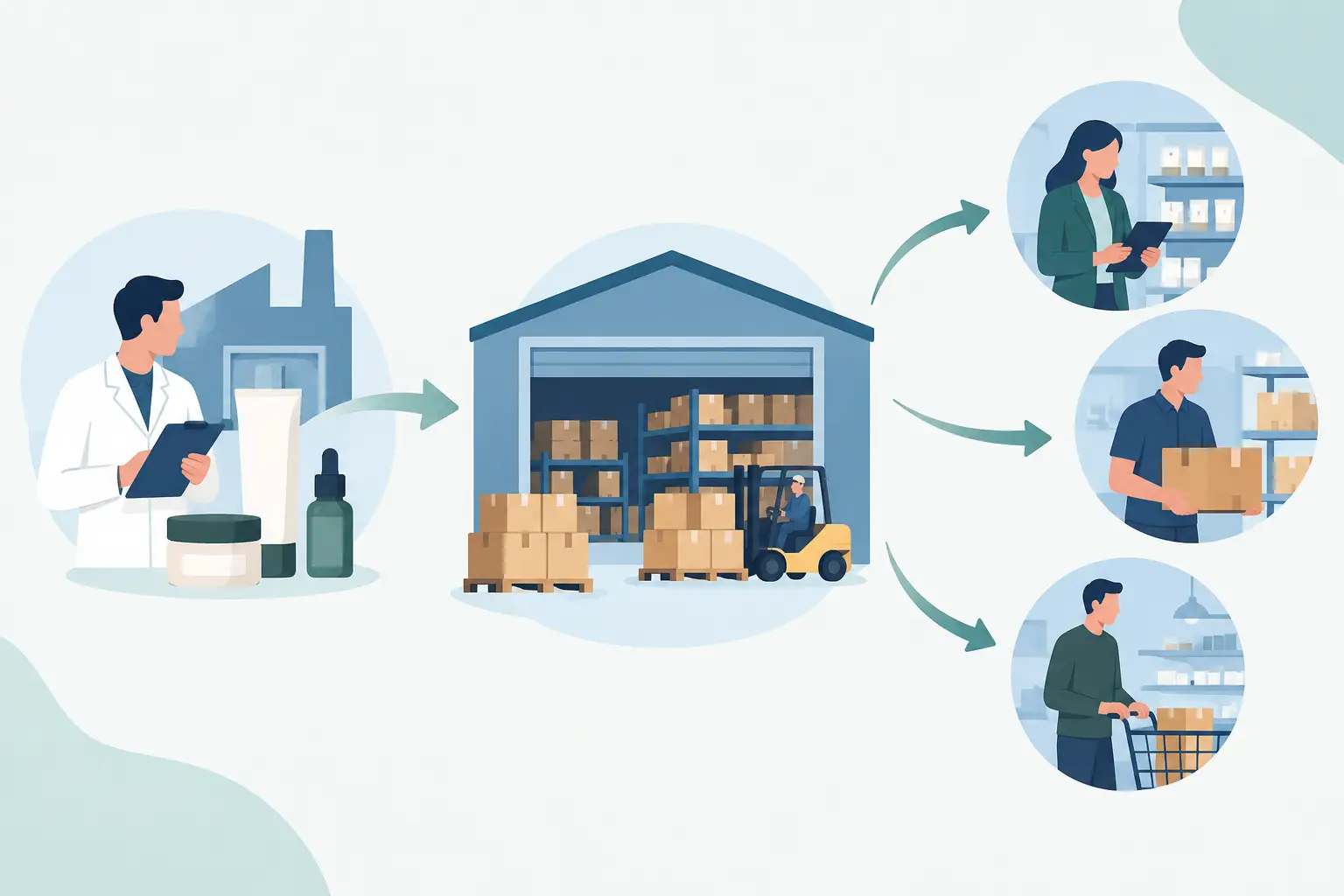

Retail margins can disappear faster than most operators expect. A small increase in landed cost, a delayed shipment, or inconsistent supplier pricing can force retailers to raise shelf prices or accept lower profitability. That is exactly why understanding how wholesale sourcing reduces retail costs matters for businesses that want to stay competitive without sacrificing stock reliability.
For retailers, distributors, and resellers, cost control is rarely about one single purchase price. It is the result of sourcing structure. When procurement is handled through experienced wholesale partners with scale, category depth, and dependable supply networks, retail businesses gain more control over unit cost, freight efficiency, replenishment, and inventory planning. The benefit is not only cheaper buying. It is a more stable commercial model.
How Wholesale Sourcing Reduces Retail Costs in Practice
Wholesale sourcing reduces retail costs because it improves the economics behind every stage of procurement. A retailer buying in low volumes from fragmented suppliers often faces higher per-unit pricing, repeated shipping charges, uneven lead times, and more administrative work. Those costs may not always appear on the invoice as a line item, but they affect final shelf pricing and margin.
By contrast, sourcing through a wholesale trading partner allows buyers to consolidate purchasing. Higher-volume transactions usually create better price tiers, and consolidation across multiple product categories reduces the inefficiencies that come with placing many small orders. In practical terms, that means the retailer spends less to put each item on the shelf.
This model becomes even more valuable in categories with repeat demand, such as household goods, cleaning products, stationery, beauty items, kitchenware, and tools. If stock moves regularly, every percentage point saved at the sourcing level compounds over time.
Lower Unit Costs Through Volume Economics
The most obvious cost advantage is the unit price itself. Wholesale suppliers operate at scale, buying, importing, manufacturing, or distributing larger volumes than an individual retailer can usually achieve alone. That scale creates better purchasing economics, which can then be passed through the supply chain.
For a retailer, this translates into stronger buying power without needing to build direct factory relationships across multiple markets. Instead of negotiating with several vendors for small quantities, the retailer can access volume-based pricing through one established source. This is especially useful for growing businesses that need competitive rates but are not yet buying enough to secure ideal terms from manufacturers independently.
There is a clear trade-off, however. Buying larger quantities can reduce cost per unit, but only if inventory turnover supports it. If a retailer overbuys slow-moving products, the lower purchase price may be offset by storage costs, tied-up cash, and markdown risk. Effective wholesale sourcing works best when purchasing volume is matched to realistic sell-through.
Freight, Handling, and Consolidation Savings
Many retail businesses focus on product price and underestimate the impact of logistics. Freight, customs processing, warehouse handling, and local delivery all affect the true landed cost of goods. When products are sourced from multiple small suppliers, those costs tend to multiply.
A wholesale source with a broad assortment can consolidate categories into fewer shipments and fewer supplier touchpoints. That reduces duplicate transportation costs, simplifies documentation, and cuts down on operational friction. The result is not just a lower landed cost, but a more predictable one.
This matters greatly for importers and regional traders. A delayed or fragmented shipment can create stock gaps, urgent replenishment costs, and emergency purchasing at less favorable prices. A dependable wholesale model reduces those disruptions by creating a more organized flow of goods.
Better Margin Control Across Product Lines
Retailers do not usually operate on one product. They manage assortments. Some items are margin leaders, some drive traffic, and some support basket size. A broad wholesale sourcing strategy helps retailers balance this mix more effectively.
When multiple categories are sourced through one reliable wholesale partner, buyers can manage margin structure with more precision. They may choose aggressive pricing on fast-moving essentials while protecting margin on complementary lines. They can also compare category performance more clearly because pricing and fulfillment are coming from a more centralized source.
That centralization is often overlooked. Cost reduction is not only about getting the lowest quote on a single SKU. It is about creating a sourcing system that helps the entire assortment perform better.
How Wholesale Sourcing Reduces Retail Costs Beyond Price
One of the strongest advantages of wholesale sourcing is that it cuts indirect costs, not just direct ones. Procurement teams spend time qualifying vendors, following up on shipments, checking product consistency, resolving claims, and managing paperwork. Those activities consume labor and create delays.
Working with an established wholesale supplier reduces that burden. Product categories are already organized, supply lines are already built, and repeat ordering becomes more efficient. The savings here are operational, but they are still real. Fewer errors, fewer supplier conversations, and fewer emergency interventions contribute to lower total sourcing cost.
For businesses managing broad inventories across multiple consumer categories, this is a meaningful advantage. Procurement simplicity supports faster decision-making and better stock continuity.
Stock Reliability Prevents Expensive Retail Disruption
Retail cost is affected not only by what is purchased, but by what is unavailable. Stockouts often push retailers into reactive buying. They may need to source from higher-cost alternatives, place rush orders, or lose sales altogether. In each case, margin suffers.
A strong wholesale sourcing partner helps prevent these outcomes by offering more consistent stock availability and replenishment planning. This is particularly valuable for retailers with recurring demand and for distributors serving downstream customers who expect continuity.
In practical terms, reliable stock can be just as important as a low quoted price. A supplier offering the cheapest product but inconsistent fulfillment may cost more over time than a partner with slightly higher pricing and dependable supply. Experienced buyers understand this distinction. Total cost must be evaluated over repeated cycles, not a single transaction.
Access to Assortment Without Expanding Supplier Risk
Retailers often need variety to serve their markets effectively. Customers want choice across price points, packaging formats, and product styles. Building that assortment through many separate suppliers increases risk and complexity.
Wholesale sourcing allows retailers to widen assortment while keeping procurement more controlled. A diversified wholesale partner can provide access to multiple categories, in-house brands, and established branded products from a single commercial relationship. This helps buyers respond to market demand without overextending their sourcing network.
That approach is especially useful in regional trade environments where buyers need both breadth and continuity. Businesses can test new lines, adjust category mix, and replenish proven sellers while maintaining a more efficient purchasing structure.
Why Supplier Relationships Matter to Cost Reduction
The strongest wholesale arrangements are not transactional. They are relationship-driven. Long-term supplier relationships often produce better commercial terms, better visibility into stock planning, and faster problem resolution. Over time, that stability reduces procurement risk and supports more accurate retail pricing.
This is one reason established trading houses continue to play a major role in distribution. Experience in import-export operations, category management, and regional trade conditions allows them to support customers more consistently than a fragmented supplier base can. For many retailers and resellers, that experience translates directly into lower operating cost.
A company such as Fakhruddin General Trading, with deep category coverage and decades of supply relationships, reflects the practical advantage of this model. Buyers benefit not only from product availability and competitive pricing, but from working with a wholesale infrastructure built for repeat volume.
When Wholesale Sourcing Works Best
Wholesale sourcing is most effective when the business has recurring demand, a clear understanding of category movement, and the operational ability to plan inventory responsibly. It works well for retailers seeking stronger margins, for distributors serving multiple accounts, and for traders who want to reduce sourcing fragmentation.
It may be less effective when demand is highly uncertain or when a buyer prioritizes very small experimental quantities over cost efficiency. In those cases, flexibility may matter more than unit economics. Even then, many businesses use wholesale sourcing for core products while keeping a smaller portion of buying open for testing.
The key is not simply to buy in bulk. It is to build a sourcing strategy that lowers total cost while protecting service levels.
Retail businesses that remain competitive over time usually do not rely on pricing tactics alone. They build stronger procurement foundations, choose partners that can support scale, and reduce avoidable cost across the supply chain. When sourcing is organized well, lower retail cost becomes a result of better structure, not short-term compromise.
For any business selling into price-sensitive markets, that discipline creates room to compete with confidence and grow with greater control.