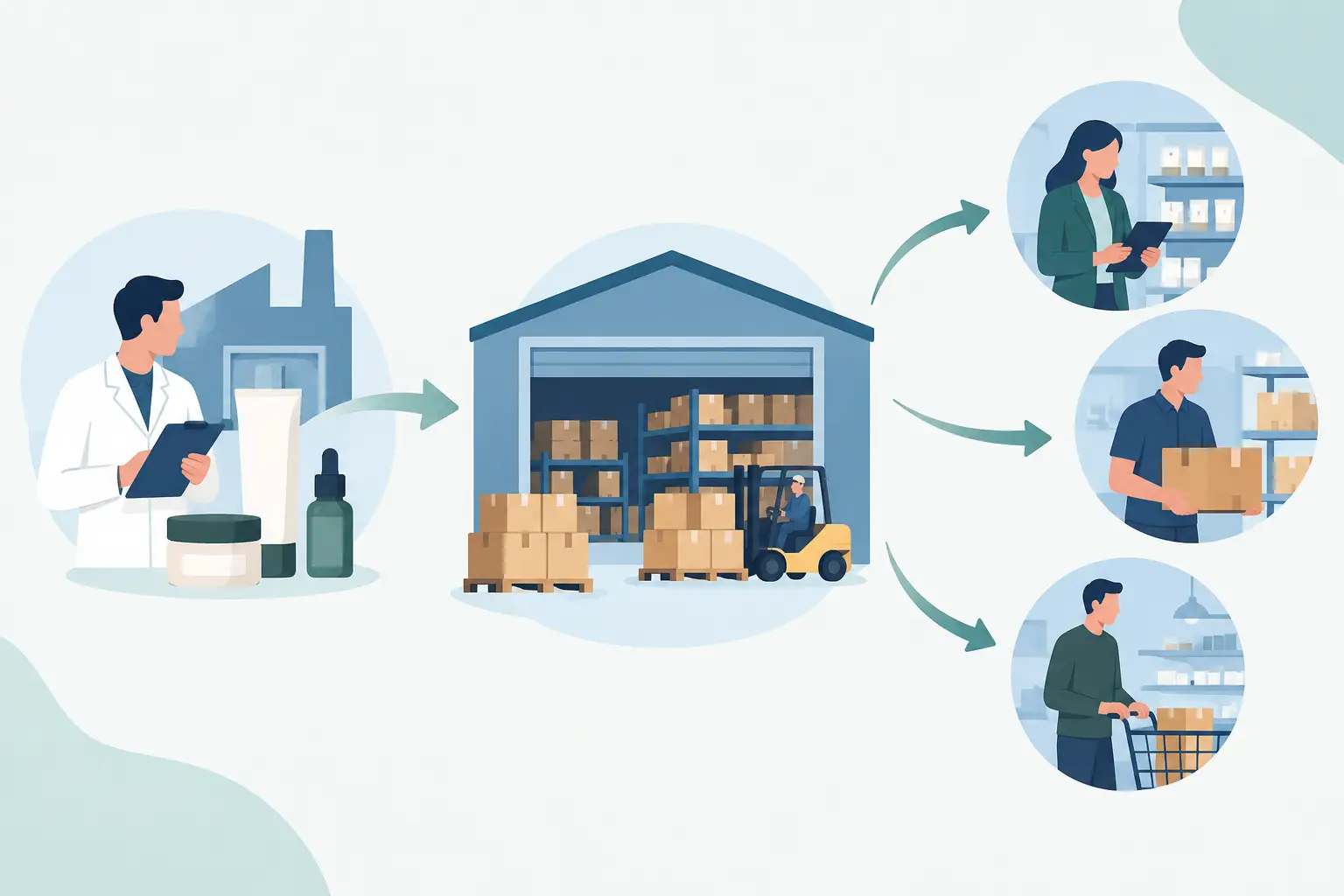

Margins are often won or lost long before goods reach the shelf. In wholesale trading, the real advantage comes from buying correctly, moving efficiently, and working with supply partners that can support repeat volume without disruption. That is where a practical import export wholesale guide becomes useful – not as theory, but as a framework for making stronger purchasing and distribution decisions.
For wholesalers, distributors, and retail buyers, import-export is not simply about moving products across borders. It is about controlling landed cost, protecting product availability, reducing sourcing complexity, and building a supply chain that can scale across categories and markets. Businesses that approach this well tend to grow steadily. Businesses that treat it as a series of one-off transactions often face stock gaps, compliance issues, and unstable margins.
What an import export wholesale guide should actually help you do
A useful guide should help buyers make better commercial decisions, not just explain trade terminology. In practice, that means understanding how to select the right product mix, how to compare suppliers beyond quoted price, and how to align logistics with sell-through expectations.
Wholesale trade works best when three factors are in balance: product breadth, pricing discipline, and supply reliability. A low unit cost can look attractive until shipment delays, documentation errors, or inconsistent stock levels begin to affect customer relationships. In the same way, a supplier with broad inventory may still not be the right fit if order planning, quality consistency, or category coverage are weak.
The strongest wholesale operations build around repeatability. They know which categories move predictably, which items support margin, and which suppliers can fulfill orders consistently over time. That is the commercial foundation of sustainable import-export growth.
Start with category strategy, not just product selection
Many buyers begin by looking for a popular item. Experienced traders start with category logic. That means asking how a product fits into the broader buying pattern of the market, whether it supports recurring demand, and whether it can be grouped with related goods to improve order efficiency.
For example, a buyer sourcing household and cleaning products may benefit from consolidating across adjacent categories such as kitchenware, storage items, and utility goods. This reduces fragmentation in procurement and often strengthens pricing discussions through larger combined volume. It also creates more value for downstream retail or distribution customers who prefer fewer suppliers and broader assortments.
Category planning matters because wholesale is rarely about a single winning product. It is about maintaining a commercially sound mix. Fast-moving everyday goods can support steady turnover, while selected specialty lines may provide stronger margins. The right balance depends on market profile, cash flow tolerance, storage capacity, and customer demand patterns.
Supplier selection in wholesale trade is about more than price
A common mistake in import-export buying is overvaluing the initial quote. Price matters, but the quoted price is only one part of the transaction. Serious buyers evaluate supplier strength through consistency, lead times, documentation accuracy, export readiness, and the ability to support multiple categories over time.
A dependable trading partner should be able to answer practical questions quickly. Can they maintain stock availability on repeat orders? Do they understand export packing requirements? Can they support mixed-category shipments? Are their product standards consistent across batches? These issues affect profitability far more than a small difference in unit cost.
This is where established trading houses often provide an advantage. A supplier with broad inventory, in-house brands, and established regional distribution relationships can reduce risk for buyers who need continuity rather than occasional supply. For importers serving multiple resale channels, consistency is often worth more than chasing the lowest offer in the market.
The landed cost is the number that matters
Every experienced importer knows that a low purchase price can still produce a weak deal. Landed cost gives the real picture. It includes the supplier price, freight, duties, handling, insurance, inland transport, packaging requirements, and any compliance-related expenses.
This is one of the most important sections in any import export wholesale guide because it directly shapes pricing strategy. If landed cost is not calculated accurately, downstream pricing becomes unstable. That can force margin cuts, reduce competitiveness, or leave inventory sitting longer than expected.
Different categories also behave differently. Lightweight consumer goods may absorb freight more easily than bulky low-value items. Fragile products may require stronger packaging. Regulated categories may create additional compliance steps. The right sourcing decision depends on the full cost structure, not just invoice value.
Compliance and documentation cannot be treated as admin work
In cross-border wholesale, paperwork is part of the transaction itself. Commercial invoices, packing lists, certificates of origin, product declarations, and shipping documents all affect customs clearance and delivery timing. Errors here can delay shipments, increase cost, or create avoidable disputes.
For importers and exporters working across the UAE, Africa, Asia, Europe, and the Middle East, requirements can vary by destination, product type, and trade arrangement. That means documentation discipline is not optional. It is part of commercial reliability.
The best operators build this into the buying process from the start. They confirm product specifications clearly, align packaging and labeling requirements early, and work with suppliers who understand export procedures. This saves time later and protects both the shipment and the customer relationship.
Inventory planning is where wholesale performance becomes visible
A strong sourcing strategy can still fail if inventory planning is weak. Too much stock ties up capital and warehouse space. Too little stock creates missed sales and weakens customer confidence. Import-export wholesale success depends on planning that reflects demand cycles, shipping lead times, reorder thresholds, and category seasonality.
Some categories tolerate longer planning horizons because demand remains consistent. Others are more sensitive to season, promotions, or regional buying cycles. Buyers need to account for this when placing volume orders. The right order size is not always the biggest order. It is the order that balances pricing efficiency with inventory movement.
This is especially relevant for businesses that serve both traditional trade and modern retail channels. Order frequency, packaging preferences, and product turnover can differ significantly between customer types. A wholesale partner with a wide assortment can help buyers consolidate planning, but only if stock visibility and replenishment consistency are strong.
Why Dubai remains a strategic base for import-export wholesale
Dubai continues to be a preferred trading base because it offers a combination that few markets can match: logistics connectivity, commercial infrastructure, regional access, and a strong culture of international trade. For buyers serving the GCC, Africa, South Asia, and nearby markets, this matters in practical terms.
A centralized sourcing base can reduce complexity. It allows buyers to access multiple product categories, coordinate shipments more efficiently, and work through established export channels. It also supports relationship-based trading, which remains important in wholesale. When buyers can rely on experienced supply partners with regional knowledge, they are better positioned to scale into adjacent markets.
For businesses that value broad assortment and consistent stock across consumer and business goods, working with an established Dubai trading company can create operational advantages that go beyond procurement.
An import export wholesale guide for long-term growth
The businesses that perform well in wholesale rarely treat sourcing as a short-term exercise. They build systems around continuity. They review category performance, track landed cost carefully, maintain supplier discipline, and protect customer relationships through dependable fulfillment.
This is also where scale begins to matter. A trading partner with extensive category coverage can help reduce the number of supplier relationships a buyer needs to manage. That can improve buying efficiency, simplify shipment planning, and support stronger commercial terms over time. Fakhruddin General Trading operates in exactly this space, serving volume buyers who need broad product access, competitive pricing, and dependable supply across regional markets.
There is no single formula that fits every importer or exporter. Some businesses prioritize margin. Others prioritize availability, category range, or market speed. Most need a practical balance of all four. The right approach depends on your market, your customer base, and your operating model.
The stronger path is usually the steadier one: buy with a clear category strategy, calculate total cost honestly, choose partners built for repeat trade, and treat every shipment as part of a longer commercial relationship. That is how wholesale businesses move from occasional deals to lasting growth.