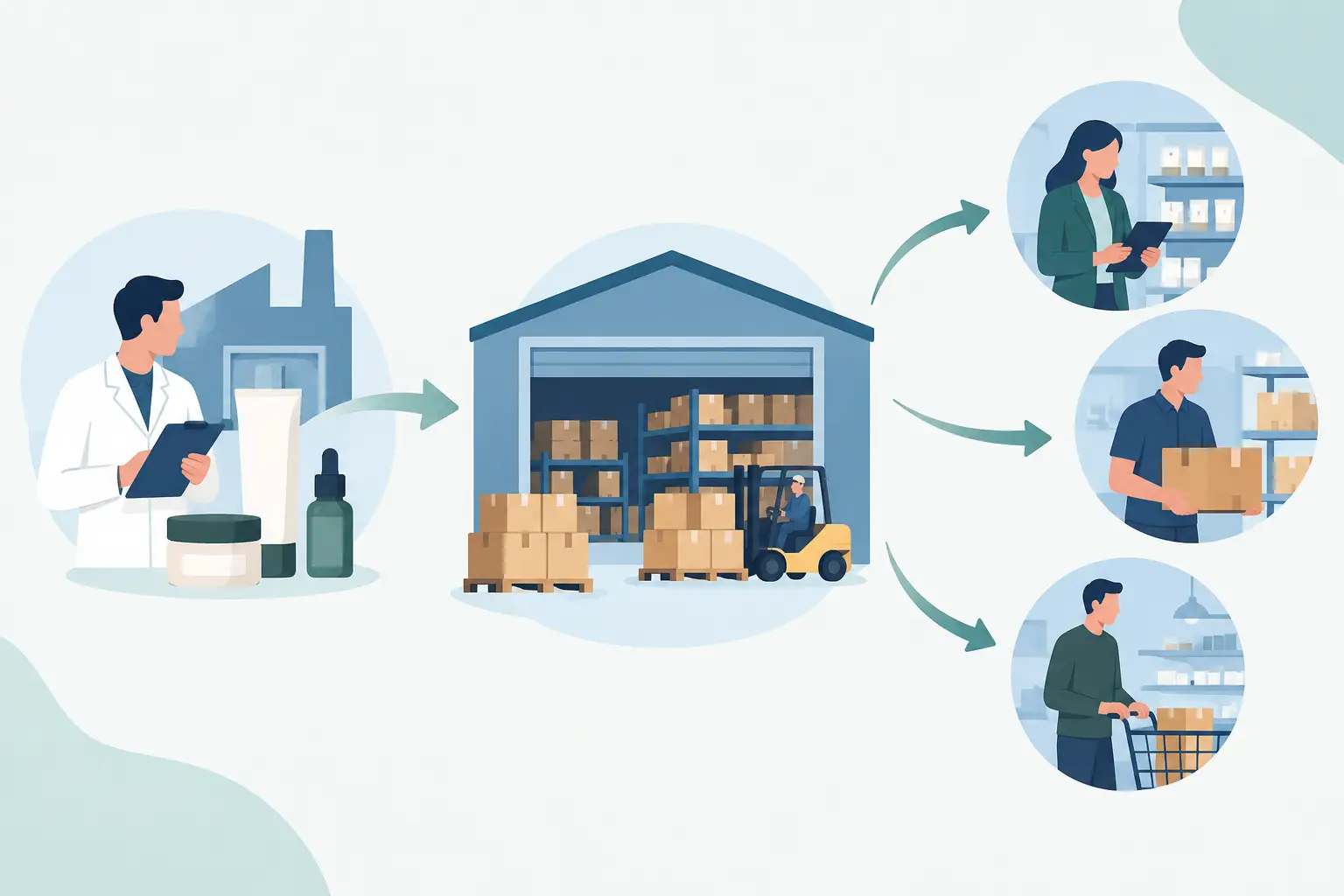

A private label sourcing guide is only useful if it helps you avoid expensive mistakes before the first container ships. For wholesalers, distributors, and retailers, private label is not simply about putting a logo on a product. It is a commercial decision that affects margin, stock reliability, compliance, and long-term customer trust.
In practice, the strongest private label programs begin with discipline. The product may be simple, but the sourcing process is not. If the supplier cannot hold quality, if the packaging is inconsistent, or if lead times move every season, the label on the carton will not protect your business. A dependable sourcing strategy does.
What a private label sourcing guide should actually cover
Many buyers approach private label with one question: what is the cheapest landed cost? That matters, but it is only one part of the decision. A sound sourcing plan has to balance price, quality, order volume, speed, and market fit.
This is especially true when you are buying for multiple channels or exporting into different regions. A product that works for one market may need different labeling, specifications, pack sizes, or certifications for another. The better approach is to treat private label as a structured supply program, not a one-time buying exercise.
A useful private label sourcing guide should help buyers assess six areas clearly: product selection, supplier capability, cost structure, compliance, packaging execution, and replenishment reliability. If one of these is weak, the program usually becomes difficult to scale.
Start with the right product, not the easiest factory
The first sourcing mistake is choosing a product because a factory offers it at an attractive price. The right sequence is the opposite. Start with a category that has stable demand, repeat purchase behavior, and room for margin after all costs are included.
For many wholesale buyers, practical product categories tend to perform better than trend-driven items. Household goods, cleaning items, kitchenware, personal care accessories, baby products, stationery, and basic consumer essentials often provide a stronger foundation for private label because reorders are more predictable. The packaging can still differentiate the brand, but demand does not depend entirely on fashion cycles.
That does not mean every staple product is a good private label opportunity. Some categories are heavily price-driven, leaving little room for branding or quality upgrades. Others require technical testing or product liability controls that may be too demanding for an initial launch. The commercial question is simple: can this product support your target margin, expected reorder frequency, and acceptable risk level?
How to qualify suppliers in a private label sourcing guide
Supplier qualification is where many private label projects succeed or fail. A good sample is not enough. A trading partner has to show consistency across production, documentation, packaging, and delivery.
Begin by assessing whether the supplier already produces for recognized wholesale or retail programs. Factories familiar with private label work usually understand barcode placement, carton markings, packaging tolerances, and approval processes. This reduces avoidable back-and-forth later.
Then look at capacity. A smaller supplier may provide excellent attention on a first order but struggle when your volumes increase. On the other hand, a very large supplier may offer competitive pricing but require minimum order quantities that do not fit your market. The right fit depends on your forecast, cash flow, and how quickly you expect to expand.
Documentation matters just as much as production. Ask clear questions about product specifications, raw materials, testing history, lead times, and packaging standards. A serious supplier should be able to provide structured answers, not vague assurances. Consistency in communication is often an early indicator of consistency in operations.
Build your costing model before you negotiate
Price negotiation without full costing can create false savings. A lower ex-factory price may be offset by higher packaging costs, higher defect rates, longer lead times, or inefficient shipping configurations. Buyers who focus only on unit cost often discover margin problems after the order is already in motion.
A proper costing model should include product cost, packaging cost, molds or artwork charges where applicable, inspection costs, freight, duties, warehousing, and the expected allowance for damaged or non-compliant stock. If you are supplying distributors or retail chains, also account for promotional pricing pressure, credit terms, and returns exposure.
This is where experienced wholesale sourcing partners add real value. At scale, commercial efficiency comes from knowing how pack sizes, carton dimensions, order quantities, and shipment planning affect total landed cost. Sometimes the best margin comes from a slightly higher unit price paired with better fill rates and fewer claims.
Packaging is not a design exercise alone
In private label, packaging is often treated as a branding matter first. In reality, it is both a branding and operations matter. Attractive packaging can help a product sell. Poorly executed packaging can create delays, customs issues, retail rejection, or product damage.
Your packaging brief should define more than color and logo use. It should cover material specifications, print quality standards, barcode requirements, label content, carton markings, pack counts, and transit durability. If the product is sold across multiple markets, you may also need language variants or region-specific compliance statements.
Approvals should happen in stages. First approve the product specification. Then approve packaging artwork. Then approve a pre-production sample or pilot run that shows the full product-packaging combination exactly as it will ship. Skipping this sequence usually leads to expensive corrections.
Compliance and quality control cannot be handled later
One of the costliest assumptions in private label sourcing is that compliance can be checked after the order is placed. By that point, your leverage is reduced and your timeline is already exposed.
The compliance requirements depend on the product and destination market. Consumer goods may require specific labeling, ingredient disclosures, safety warnings, test reports, or country-of-origin marking. Some categories carry more scrutiny than others, especially baby items, beauty products, electrical accessories, and goods used in direct contact with food or skin.
Quality control should also be planned before production begins. Define acceptable quality levels, inspection timing, and product performance standards in writing. This helps avoid disputes based on assumptions. It also gives the supplier a clear operating target.
The most effective buyers do not rely only on final inspection. They use milestone checks such as sample approval, packaging approval, and in-process verification. Problems are cheaper to fix before the cartons are sealed.
Plan for repeat orders from the start
Private label becomes profitable when reordering is smooth. That means your first order should be structured with repeatability in mind. If product specifications are loose, packaging files are disorganized, or supplier lead times are uncertain, every reorder becomes a new negotiation.
Document everything. Keep approved product specs, artwork files, carton dimensions, testing records, and sample references in a centralized format. Confirm lead times for both product and packaging materials. If seasonal demand affects the category, secure production windows early.
Forecasting also deserves discipline. Buyers often place an opening order based on optimism and then reorder too late. This creates stock gaps, rushed freight, and margin erosion. A safer approach is to calculate reorder points based on actual sales velocity, production lead time, and shipping time, with a buffer for delays.
For businesses managing a broad assortment, consolidation can make a major difference. Working with an established trading house that understands multi-category sourcing, volume planning, and export requirements can reduce operational complexity. Companies such as Fakhruddin General Trading build long-term value by combining assortment depth, regional trade knowledge, and dependable supply relationships rather than treating each order as an isolated transaction.
Common private label mistakes buyers should avoid
The most common mistake is underestimating how much detail is required. Buyers sometimes approve a sample too quickly, assuming production will match it. Others push for the lowest possible price and later face quality complaints or missed delivery dates.
Another frequent issue is launching too many SKUs at once. A narrower opening range usually allows better control over packaging, inventory, and market response. Once the process is stable, expansion becomes easier and less risky.
There is also a tendency to treat private label as faster than branded sourcing. Sometimes it is, but often it requires more approvals, more documentation, and closer production management. If you build realistic timelines from the start, your decisions improve.
Private label works best when the sourcing model is commercially grounded. Strong supplier selection, disciplined costing, clear packaging controls, and consistent replenishment planning create a brand customers can trust and reorder with confidence. The label may be yours, but the reputation behind it is built in every sourcing decision you make.