
A buyer sourcing kitchenware for retail shelves, cleaning products for regional resale, or private-label goods for export faces a practical question before placing the first large order: who should supply the merchandise, and what role should they play after the sale? Wholesale vs distribution explained begins with that distinction. Both models move products through the market, but they create different responsibilities for inventory, brand development, pricing, and customer reach.
For wholesalers, distributors, importers, and retailers, knowing the difference helps reduce sourcing complexity and build a more dependable supply chain. The right choice depends on whether your priority is assortment, market coverage, brand control, or long-term channel support.
Wholesale vs Distribution Explained: The Core Difference
Wholesale is the sale of products in bulk, usually at a lower unit price, to businesses that intend to resell them. A wholesaler typically purchases goods from manufacturers, brand owners, or import channels and makes them available to retailers, traders, exporters, and other commercial buyers. The wholesaler’s central value is efficient access to volume, broad assortment, and competitive commercial terms.
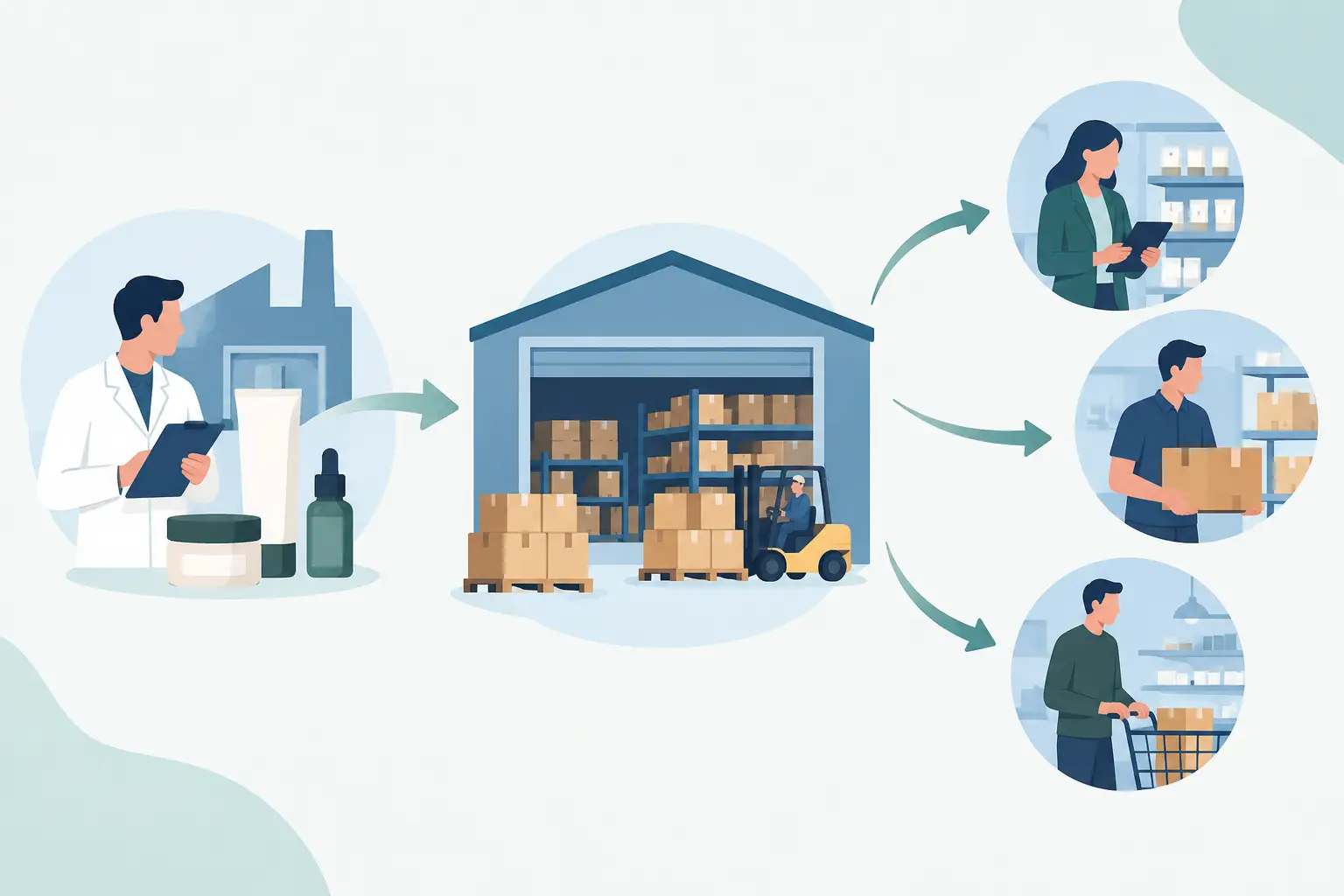
Distribution is a broader market-delivery function. A distributor purchases or represents products and takes responsibility for getting them into defined markets, customer channels, or territories. This may include warehousing, sales representation, merchandising, retailer account management, local compliance, after-sales coordination, and market feedback to the brand owner.
Put simply, wholesale focuses on supplying products in quantity. Distribution focuses on building availability and demand for products within a market. One company can perform both roles, but the commercial objectives are not always the same.
What a Wholesale Partner Does
A wholesale supplier helps buyers consolidate purchasing. Rather than negotiating separately with dozens of factories or brands, a retailer or trader can source multiple categories through one established supplier. This is especially valuable for businesses that need variety without committing to full-container quantities from every individual manufacturer.
A strong wholesaler generally maintains ready stock across a broad catalog, offers volume-based pricing, and supports recurring replenishment. The buyer decides how and where to resell the goods. That could mean retail stores, e-commerce channels, local wholesale markets, export customers, or institutional accounts.
For example, a retailer opening a household goods section may need cleaning accessories, storage products, kitchen tools, party supplies, stationery, and small electrical accessories. A wholesale model allows that retailer to purchase across categories from one source, test demand, and replenish proven lines. The retailer retains control of shelf placement, promotions, and final customer pricing.
Wholesale is usually the better fit when buyers want purchasing flexibility. They may want to mix brands, adjust quantities frequently, sell across several markets, or add new categories without entering exclusive agreements. The trade-off is that the wholesaler may not provide the same level of territory-specific sales development that a dedicated distributor offers.
Wholesale pricing and margins
Wholesale pricing is built around scale. Larger purchase quantities often create better unit economics, but minimum order values, carton quantities, shipping costs, and payment terms all influence the real landed cost. Buyers should evaluate margin based on the full cost of bringing merchandise to their warehouse or sales channel, not only on the quoted product price.
Assortment also matters. A supplier with consistent stock across high-turning categories can reduce emergency buying and missed sales. For resellers, reliable availability is often as commercially important as a low opening price.
What a Distribution Partner Does
A distributor is often closer to the brand and closer to the market. The distributor may hold exclusive or non-exclusive rights to sell a brand in a country, region, or customer channel. In return, it is expected to invest in market development and create sustained product movement.
That work can include recruiting retailers, managing sales teams, planning promotions, forecasting demand, organizing deliveries, collecting market intelligence, and protecting the brand’s position against unauthorized or poorly priced sellers. In categories such as beauty, perfumes, baby products, or branded consumer goods, this local control can be essential to maintaining product presentation and customer confidence.
Distribution agreements commonly involve targets. A distributor may commit to annual purchasing volumes, sales coverage, marketing activity, or inventory levels. The brand owner may set standards for product display, pricing discipline, reporting, and customer service. These commitments give the distributor more support and clearer market rights, but they also require greater operational investment.
A business that wants to introduce an established brand into a new country may therefore need a distribution relationship rather than a standard wholesale account. The objective is not simply to buy stock. It is to create a reliable route to market and establish the brand with suitable customers.
Wholesale and Distribution Compared in Daily Operations
The distinction becomes clearer when looking at who carries the commercial responsibility after products leave the supplier.
In a wholesale transaction, the buyer normally takes ownership and determines the resale strategy. The wholesaler supplies the goods, while the buyer manages local selling, customer relationships, pricing, and promotion. The relationship can be highly repeatable and long-term, yet it is usually centered on product supply.
In a distribution arrangement, the distributor is expected to actively represent the product in the marketplace. It may need to maintain sales coverage, stock agreed inventory levels, serve specific territories, and report performance to the brand owner. The relationship is more structured because both parties depend on coordinated market execution.
Neither model is automatically better. Wholesale offers speed, breadth, and buying independence. Distribution offers brand focus, local accountability, and stronger control over how products reach customers. The appropriate model depends on the buyer’s resources and commercial plan.
Which Model Fits Your Business?
Start with the role your business wants to play in the supply chain. If your priority is purchasing a wide range of fast-moving items for resale, wholesale will often be the more efficient option. It is well suited to retailers, market traders, e-commerce sellers, export businesses, and regional wholesalers that need choice and regular access to stock.
Distribution may be the stronger option if you have an established sales network, warehousing capacity, local market knowledge, and the ability to invest in a particular brand. A distributor should be prepared to build demand, not only fulfill orders. That makes sense when a brand requires active local representation or when market exclusivity can support a meaningful long-term return.
Ask four practical questions before selecting a model:
- Do you need broad product assortment or deep commitment to a specific brand?
- Can your business support sales coverage, promotion, and market reporting?
- Are you looking for flexible purchasing, or do you need defined territory rights?
- How much inventory and working capital can you commit to holding?
The answers should shape your sourcing strategy. A small retailer may begin with wholesale purchases across several categories, then pursue distribution rights once it has proven demand and built a stronger local network. A large regional operator may use both models at the same time: wholesale for assortment and distribution for selected strategic brands.
Why Supplier Capability Matters in Both Models
Whether you buy wholesale or operate as a distributor, the supplier behind the transaction affects your ability to serve customers consistently. Product range, import capability, stock planning, quality control, documentation, export experience, and order accuracy all have a direct effect on your reputation in the market.
For international trade, buyers should also consider packaging requirements, country-specific regulations, lead times, shipping coordination, and product labeling. A favorable unit price loses value if products arrive late, documentation is incomplete, or replacement stock is difficult to secure.
This is where a long-established trading partner can provide commercial confidence. Fakhruddin General Trading combines wholesale supply, import-export capability, manufacturing, and distribution reach across a wide portfolio of consumer and business goods. For buyers managing multiple product lines, that breadth can simplify procurement while supporting recurring volume requirements.
Building the Right Route to Market
The most effective supply model is the one that matches your operating strength. Buy wholesale when you need flexible access to quality merchandise, competitive pricing, and a wide selection that can support varied customer demand. Build a distribution relationship when you are ready to invest in a brand, protect its market position, and create dependable reach within a defined territory.
As your business grows, the line between the two may become less rigid. What matters is having clear responsibilities, realistic inventory plans, and supplier relationships that can support the next order as reliably as the first.