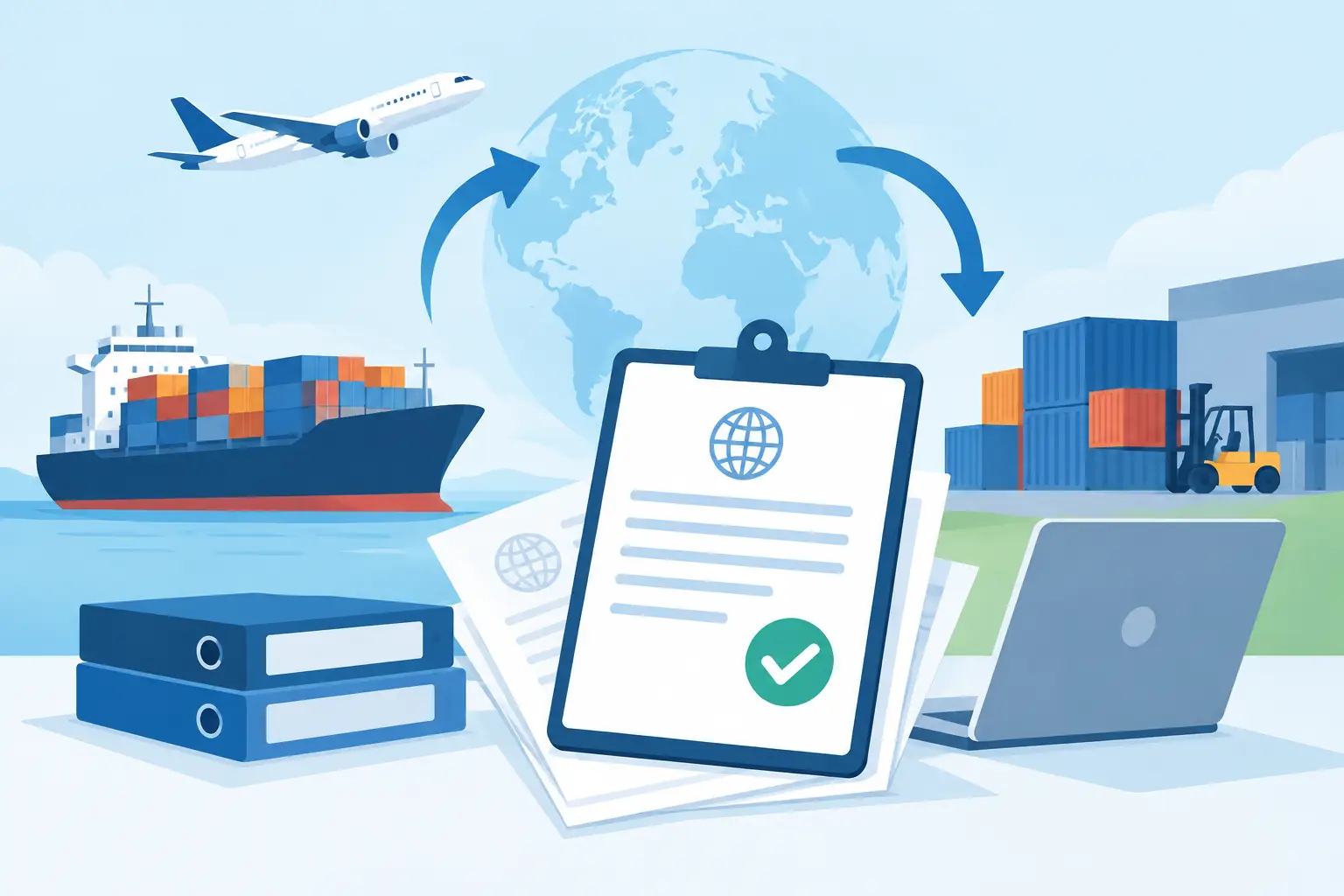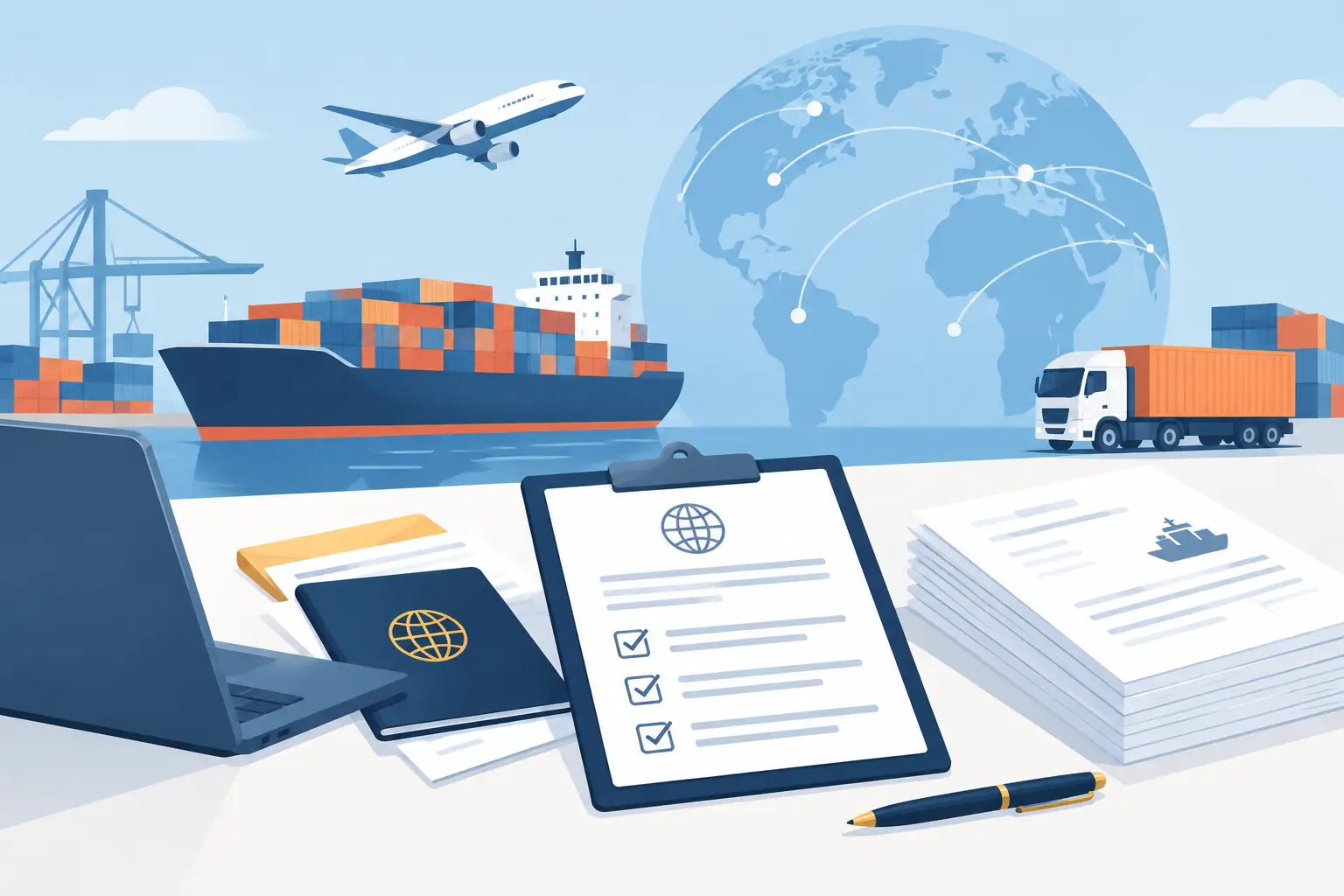

A shipment can be packed, priced, and ready for dispatch, yet still be delayed because one document contains the wrong product description, consignee name, or country-of-origin detail. Knowing what documents are required for exporting helps wholesalers, distributors, and retailers protect delivery schedules, avoid clearance issues, and give overseas customers the dependable service they expect.
For commercial exports, there is no single document pack that applies to every order. Requirements depend on the exporting country, destination market, product category, shipping method, payment terms, and whether goods are subject to special controls. However, most export transactions begin with a core set of documents that establish what is being shipped, who is involved, where the goods originated, and how they will travel.
What Documents Are Required for Exporting Goods?
For most standard wholesale shipments, the essential documents are the commercial invoice, packing list, certificate of origin, transport document, and export customs declaration. Depending on the goods and destination, the shipment may also require permits, product certificates, insurance documents, or bank-related paperwork.
The key is consistency. Customs authorities, freight forwarders, banks, and buyers should see matching information across every document. A difference in quantities, values, product names, or shipment weights can result in questions at the border and unnecessary storage charges.
Commercial invoice
The commercial invoice is the primary sales document for an international shipment. It tells customs authorities and the buyer what has been sold, the declared value, the agreed terms of sale, and the parties involved.
A well-prepared commercial invoice normally includes the exporter and consignee details, invoice number and date, product descriptions, quantities, unit prices, total value, currency, country of origin, payment terms, and Incoterms. Product descriptions should be specific enough for customs classification. For example, “household items” is too broad, while “plastic food storage containers” provides clearer information for clearance and duty assessment.
The declared value must reflect the actual commercial transaction. Undervaluing goods or using vague descriptions creates compliance risk for both exporter and importer. For recurring wholesale orders, using a controlled invoice template helps maintain accuracy across product categories and markets.
Packing list
The packing list supports the commercial invoice by showing how the shipment is physically packed. It enables freight handlers, customs officers, and the receiving customer to verify the contents of cartons, pallets, or containers.
It usually states the number of packages, package type, item quantities by carton, gross and net weight, dimensions, and shipping marks. For mixed wholesale consignments, the packing list is particularly valuable. A buyer receiving kitchenware, cleaning products, stationery, and party supplies in one container needs a clear breakdown to organize receiving and distribution efficiently.
The packing list does not typically show prices. Its purpose is operational: it should make it easy to locate, count, inspect, and receive the merchandise.
Certificate of origin
A certificate of origin confirms the country where the goods were manufactured, produced, or substantially transformed. Many destination markets require it for customs clearance, duty treatment, or trade-agreement eligibility.
For exporters in the UAE, the certificate of origin may be issued or certified through the appropriate chamber or authorized trade body, subject to current procedures. Buyers should confirm their country’s requirements before shipment, especially when importing into markets with preferential tariff arrangements or strict origin rules.
Origin should never be assumed based only on where the shipment is dispatched. Goods sourced from multiple countries and consolidated in Dubai may have different origins by product line. The commercial invoice, packing list, product labels, and certificate of origin must all align.
Bill of lading or air waybill
The transport document confirms that the carrier has received the goods and sets out the transport arrangement. For sea freight, this is generally a bill of lading. For air freight, it is an air waybill.
The document identifies the shipper, consignee, notify party, ports or airports, cargo details, freight terms, and shipment references. A bill of lading can also serve as a document of title in certain transactions, which makes accuracy especially important when goods are sold under documentary collection or letter-of-credit terms.
The choice of shipping method affects the documentation process. Air shipments move quickly but may have tighter cut-off times for paperwork. Sea shipments allow for larger volumes and lower unit freight costs, but document preparation must be completed in time for vessel schedules and destination clearance.
Export customs declaration
An export customs declaration provides the customs authority with details of the goods leaving the country. It generally includes the exporter information, importer or consignee details, commodity classification, declared value, origin, destination, transport mode, and relevant permit information.
In the UAE, exporters and their appointed customs brokers or freight forwarders submit export declarations through the applicable customs system. The exact process can differ based on whether goods are moving from the mainland, a free zone, or a bonded facility. Re-export shipments may also follow different procedures from goods manufactured or released for local circulation in the UAE.
Correct HS codes are central to this declaration. The Harmonized System code affects duty assessment, product controls, and statistical reporting at destination. A classification that appears reasonable but is not supported by the product’s material, function, or use can create delays later in the supply chain.
Documents That Depend on Your Product and Market
The core documents are only the starting point. Certain goods need additional approvals because of their composition, intended use, or regulatory status.
Food products, cosmetics, perfumes, chemicals, cleaning products, electrical accessories, toys, baby products, and goods containing batteries may require product registrations, safety data sheets, conformity certificates, test reports, or labeling evidence. Some destination countries request specific health, sanitary, fumigation, or inspection certificates. Wood packaging may require internationally accepted treatment markings where applicable.
Controlled, restricted, or branded goods require extra attention. Products subject to licensing, intellectual property restrictions, or strategic trade controls may need export permits or authorization from the relevant authority. The fact that a product is widely sold in one market does not automatically mean it can be exported freely to another.
For this reason, exporters should verify destination requirements before confirming the shipment date. This is especially necessary for first-time customers, new product lines, and markets with changing import regulations. It is easier to confirm a requirement before loading than to resolve a hold after the cargo has arrived.
Payment and Insurance Documents
Where the buyer pays by open account or advance transfer, the commercial invoice and transport documents may be sufficient for the agreed transaction. However, documentary collections and letters of credit require more disciplined document control.
A letter of credit may specify exact wording, presentation deadlines, signed invoices, original transport documents, insurance certificates, certificates of origin, and inspection documents. Even a minor mismatch can lead the bank to raise discrepancies. Exporters should review the terms before shipping, not after the vessel has departed.
Cargo insurance is not legally required for every export, but it is often commercially sensible. Responsibility for insurance depends on the agreed Incoterms. Under some terms, the seller arranges coverage; under others, the buyer does. An insurance certificate or policy should clearly match the goods, voyage, and insured value.
How to Build a Reliable Export Document Process
For high-volume traders, export paperwork should be treated as part of order fulfillment, not as an administrative task completed at the last minute. Start by collecting complete buyer details and confirming the delivery terms, destination port, product classification, and required certificates at the quotation or purchase-order stage.
Before dispatch, compare the commercial invoice, packing list, customs declaration, and transport instructions line by line. Check names, addresses, product descriptions, quantities, weights, carton counts, country of origin, and values. A second review is worthwhile when one order includes products from different manufacturers or countries of origin.
It is also wise to retain an organized record of invoices, declarations, certificates, and shipping documents for each export shipment. This supports customer service, repeat orders, claims handling, audits, and future customs inquiries. Established trading partners value suppliers who can provide accurate document copies quickly when questions arise.
At Fakhruddin General Trading, international wholesale supply is supported by the practical understanding that reliable documentation is part of reliable distribution. Whether an order includes a single product range or a mixed container of consumer goods, the documentation should support a clear handover from warehouse to carrier to customer.
The best next step is simple: confirm the destination-specific requirements before goods are packed, then build every shipment document from the same verified order data. That discipline keeps cargo moving and protects the trading relationships behind every order.