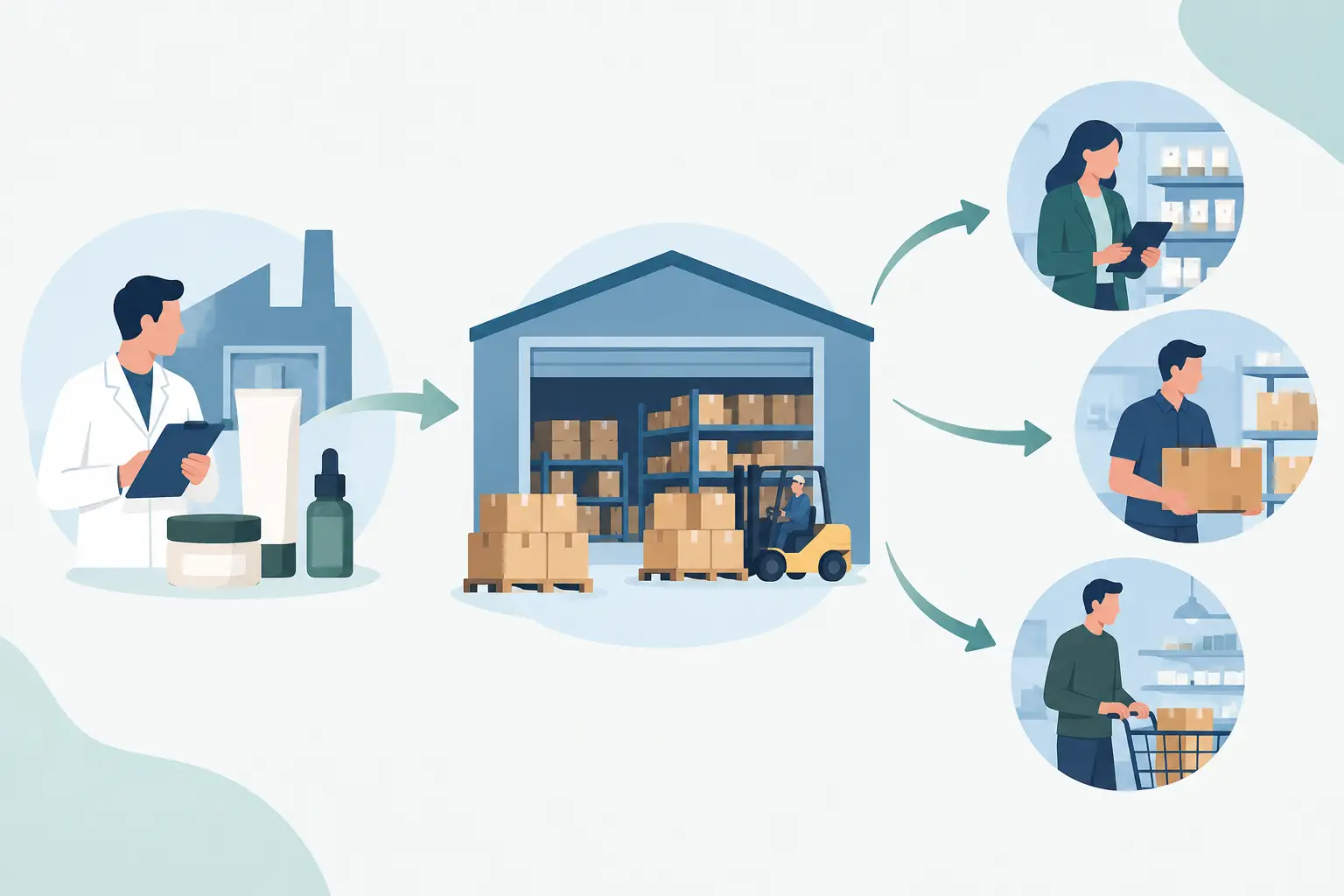

A retailer can sell a familiar product category without competing only on familiar brand names. That is the commercial value behind understanding how private label distribution works. A distributor or wholesale buyer sources products made for its own brand, then supplies them to retailers, resellers, or regional partners under agreed commercial terms.
For businesses buying at volume, private label can create stronger price control, clearer market positioning, and a product range that competitors cannot source from the same branded supplier. It also places greater responsibility on the buyer to manage specifications, quality, inventory, packaging, and demand planning.
What Private Label Distribution Means
Private label distribution is the process of bringing products to market under a brand owned or controlled by the seller, distributor, retailer, or importing company rather than the factory that produces them. A manufacturer may make the same type of kitchenware, cleaning product, stationery item, beauty accessory, or baby product for several customers. Each customer can use different packaging, product specifications, colors, labeling, and brand identity.
The private label owner decides how the product will be presented and where it will be sold. The distribution partner manages the movement of goods through the supply chain, whether that means supplying retail stores, wholesale traders, e-commerce sellers, export customers, or a network of sub-distributors.
This model differs from traditional branded distribution. With established brands, the distributor purchases finished goods already carrying the manufacturer’s name and marketing identity. In private label, the distributor or buyer has more influence over the final product but assumes more commercial risk.
How Private Label Distribution Works Step by Step
The process begins with a market need. A wholesaler may identify demand for value-priced household products, travel accessories, cleaning tools, party supplies, or personal care items that are consistently requested but not adequately covered by existing brands. The goal is not simply to place a logo on a generic item. It is to create a dependable product offer for a defined customer segment.
Product Selection and Specifications
First, the private label owner selects product categories and sets requirements. These may include material quality, dimensions, colors, pack quantities, safety standards, fragrance, performance requirements, or retail price targets.
A retailer serving price-sensitive shoppers may prioritize affordable packs and fast-moving essentials. A specialty retailer may require more refined packaging, differentiated colors, or higher-grade materials. The right specification depends on the intended sales channel and the margin required at every stage of distribution.
Clear specifications reduce misunderstandings with factories and help protect consistency across repeat orders. Samples and pre-production approvals are especially valuable where product appearance, durability, or packaging quality affects customer confidence.
Manufacturing and Branding
Once specifications are approved, a manufacturer produces the goods. The manufacturer may offer existing product molds or formulas, minor customization, or fully custom development. Using an existing product design is often faster and requires lower minimum order quantities. Custom development can create a more distinctive offer, but it usually requires more time, higher investment, and larger commitments.
Branding is applied through labels, printed packaging, hang tags, cartons, inserts, or direct product printing. Packaging must do more than look appropriate on a shelf. It should include accurate product information, barcodes where needed, country-of-origin details, required warnings, and market-specific compliance information.
For export-focused businesses, labeling must be planned early. Requirements may vary by destination, product category, language, and local regulations. A label suitable for one market may not be acceptable in another.
Importing, Warehousing, and Inventory Control
After production, goods are shipped to the importer or distribution center. This stage includes freight planning, customs documentation, duty and tax considerations, receiving checks, and warehouse allocation. For a distributor handling broad assortments, private label products must fit into an organized replenishment system alongside external brands and other product lines.
Inventory control is central to profitability. Ordering too little can lead to missed sales and customer frustration. Ordering too much can tie up working capital, increase storage costs, and create slow-moving stock. This is particularly relevant for seasonal party supplies, trend-led beauty accessories, and products with short shelf lives.
Experienced distributors forecast demand using order history, seasonality, customer commitments, and market conditions. They also monitor minimum order quantities and production lead times before confirming a purchase order. A low unit cost is not always the best decision if the required order volume is difficult to sell through.
Wholesale Distribution to Customers
Once inventory is available, the private label distributor sells to trade customers through its wholesale sales team, showroom, catalogs, online wholesale platform, or distribution partners. Customers may purchase mixed-category orders, full cartons, pallets, or container loads depending on their business model.
The distributor provides the commercial structure that makes the brand available at scale. This can include product assortment planning, tiered pricing, credit terms for qualified customers, sales support, export documentation, and reliable fulfillment. For a retailer, the advantage is access to a differentiated range without managing direct factory relationships and international shipping for every product line.
At this stage, stock availability matters as much as price. A product that sells well but cannot be replenished consistently can weaken a retailer’s confidence and encourage them to source alternatives. Reliable distribution turns a private label from a one-time buying opportunity into a repeatable business line.
Where the Margin Comes From
Private label is often associated with better margins, but the calculation must be realistic. The selling price must cover more than the factory price. Landed cost can include packaging, inspection, freight, insurance, customs charges, local delivery, warehousing, financing, damages, and promotional support.
A distributor needs sufficient margin to hold inventory, support sales operations, and accommodate trade discounts. The retailer also needs room to earn a fair margin while keeping the shelf price competitive. If either party has too little margin, the product may move volume but fail to support sustainable growth.
Private label can improve margins because there may be fewer layers between factory and market, and there is no requirement to pay for the marketing structure of a global consumer brand. However, this advantage can disappear when orders are poorly planned, product quality is inconsistent, or stock remains unsold.
Quality Control Protects the Brand Name
When a product carries a private label, customer feedback attaches directly to that brand. A defective zipper on luggage, leaking cleaning bottle, weak kitchen tool, or inaccurate product label does not reflect on an anonymous factory. It reflects on the company selling the item.
Quality control should include supplier assessment, sample approval, production checks, packaging inspection, and receiving inspection before goods enter the sales inventory. The appropriate level of control depends on the product. Electrical accessories, baby products, cosmetics, and products with safety implications require more rigorous documentation and testing than many basic general merchandise items.
Consistency is equally important. A product that performs well in the first shipment but changes in material or finish in the next shipment can create returns, disputes, and lost repeat business. Long-term factory relationships, detailed specifications, and documented approval standards help reduce this risk.
The Role of the Distributor in a Regional Market
Private label distribution becomes more valuable when a company has established reach across multiple markets. A capable distributor can consolidate products from different factories, maintain stock in a central trade hub, and supply customers across the UAE, the Middle East, Africa, Asia, and other export destinations.
This approach reduces sourcing complexity for buyers who need more than one product category. Rather than coordinating separate shipments from multiple factories, a trader may source a broader assortment from one dependable wholesale partner. That can simplify purchasing, reduce administrative work, and support more efficient mixed orders.
Fakhruddin General Trading operates in this environment by combining broad product availability, wholesale experience, and established trade relationships. For buyers, the value lies in accessing products at scale while working with a supplier that understands repeat ordering, commercial documentation, and regional distribution requirements.
When Private Label Is the Right Choice
Private label is most suitable when a buyer has a clear customer base, enough expected volume to support minimum order quantities, and the ability to maintain inventory. It works particularly well for staple categories where customers value dependable quality and competitive pricing, as well as for products where distinct packaging can help a retailer build recognition.
It may not be the best first move for every business. Buyers with unpredictable demand, limited storage capacity, or very small order volumes may be better served by purchasing established wholesale brands or ready-stock general merchandise. A blended approach is often practical: use recognized brands to build immediate trust and private label products to create differentiation and improve control over margin.
The strongest private label programs are built around repeat demand, disciplined inventory decisions, and suppliers who treat consistency as a commercial commitment. Start with products your customers already request, define the quality level they expect, and build the distribution plan before placing the order.