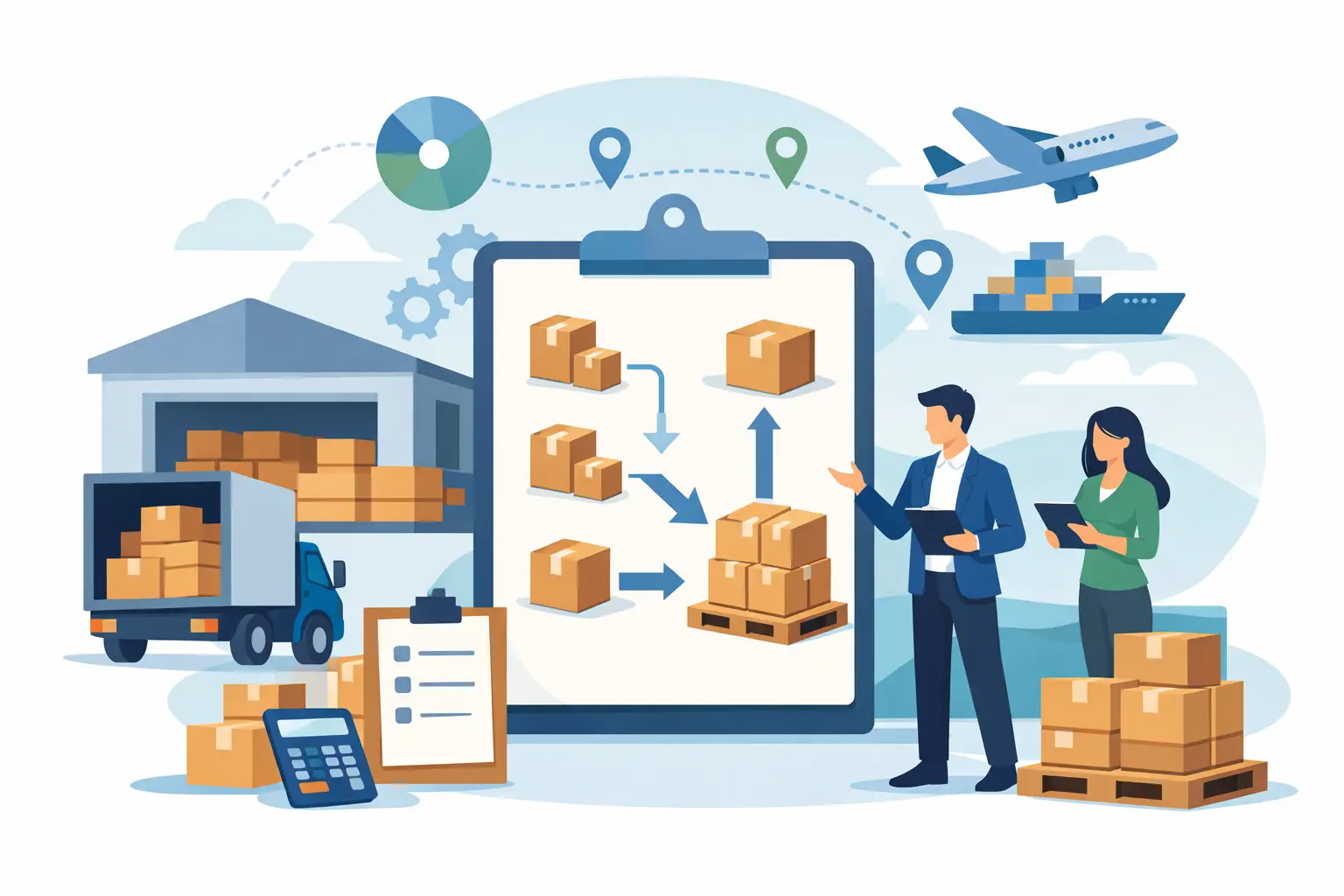

A shipment of low-margin goods can become expensive quickly when it arrives as separate deliveries, each with its own freight charge, receiving work, customs paperwork, and risk of delay. Learning how to consolidate wholesale orders helps wholesalers, retailers, importers, and distributors turn multiple purchasing needs into a more controlled, cost-effective supply plan.
For businesses buying across household goods, cleaning products, beauty items, kitchenware, stationery, tools, and other fast-moving categories, consolidation is not simply about placing a larger order. It is about coordinating demand, supplier timing, packaging, transport, and inventory so that every shipment earns its space.
Why Consolidating Wholesale Orders Matters
Order consolidation combines products, purchase orders, or supplier deliveries into fewer, fuller shipments. The commercial benefit is clear: freight, handling, customs clearance, and receiving costs are generally lower per unit when goods move together instead of in small, frequent consignments.
The operational benefit can be just as valuable. A receiving team processing one well-planned container or palletized shipment has fewer delivery appointments to manage, fewer documents to reconcile, and less opportunity for discrepancies to be missed. Finance teams also gain better visibility over landed cost when transportation and related charges are allocated across a planned shipment rather than added to a series of urgent orders.
Consolidation is especially useful when your business sells a broad assortment. A retailer may need cleaning supplies, party goods, kitchen accessories, and stationery for the same promotion cycle. Buying these categories through a centralized wholesale partner can reduce the number of vendors, invoices, and delivery schedules involved.
However, larger combined orders are not automatically better. Buying too much just to fill a container can tie up working capital, increase storage requirements, and create slow-moving inventory. The right approach balances freight efficiency with realistic demand and cash flow.
How to Consolidate Wholesale Orders Without Creating Overstock
A successful consolidation plan starts before products are selected. It requires a clear view of what is selling, what is already in transit, and when stock is actually needed at each location.
Begin with demand, not supplier promotions
Review sales history by SKU, category, customer segment, and season. Separate stable, repeat-demand items from promotional, seasonal, or uncertain products. Your core products are usually the strongest foundation for a consolidated order because their replenishment needs are easier to forecast.
For example, a distributor with steady demand for cleaning accessories and household essentials can use those lines as the base volume for a shipment. Higher-risk products, such as seasonal party supplies or trend-led beauty items, can be added in measured quantities. This creates a shipment that improves transport utilization without making the full order dependent on uncertain demand.
Set minimum and maximum stock levels for key items. The minimum should account for supplier lead time, freight transit time, customs clearance, and a sensible safety-stock allowance. The maximum should reflect warehouse capacity, shelf life where applicable, available cash, and the rate at which the item can be resold.
Combine purchase requirements across teams and locations
Consolidation often fails because each store, sales team, territory, or warehouse purchases independently. One department places an urgent order while another holds excess stock of the same or a comparable item. A single purchasing calendar reduces this fragmentation.
Ask each internal buyer to submit requirements by a defined cutoff date, using the same product codes, quantities, and delivery windows. Then review the combined demand before releasing purchase orders. This gives procurement teams the opportunity to merge similar requirements, prioritize high-turn items, and identify products that can wait for the next shipment.
If your business serves multiple locations, decide whether goods should be delivered directly to each destination or received at a central warehouse and redistributed. Direct delivery may shorten time to shelf, but a central receiving point can improve container utilization and strengthen quality control. The better choice depends on delivery volume, local transport cost, and the urgency of each location.
Work with suppliers that can support a broad basket
Supplier selection has a direct effect on how easily orders can be consolidated. When products are sourced from many separate vendors, the savings from combining goods may be reduced by different production schedules, packaging standards, payment terms, and pickup locations.
A wholesale partner with a wide assortment allows buyers to build a more complete order from fewer sources. This is valuable for traders that need a mix of consumer goods but do not want to manage separate supply relationships for every category. At Fakhruddin General Trading, buyers can source across diverse product lines through an established Dubai trading network, helping simplify purchasing for regional and export-focused orders.
Before committing, confirm the supplier’s stock availability, replenishment frequency, export documentation capability, labeling requirements, and lead times. A broad catalog is useful only when the supplier can coordinate the order reliably. Ask whether products can be held temporarily while other approved items are prepared, and whether mixed-category pallet or container loading is available.
Set order cutoffs and shipment rules
Consolidation needs discipline. Establish a regular order cycle, such as monthly, biweekly, or aligned with your major selling seasons. A fixed cycle encourages teams to plan demand instead of relying on expensive emergency replenishment.
Create clear shipment rules for when orders should move. These might include a target pallet count, a minimum shipment value, a container fill percentage, or a delivery deadline that cannot be missed. The goal is not to delay every order until it reaches maximum volume. It is to make the trade-off visible before freight is booked.
For urgent stockouts, use an exception process. A small airfreight or courier shipment may be justified when the expected lost sales, customer penalties, or production disruption exceed the added transport cost. Treat these exceptions as business decisions, not routine purchasing habits. Repeated urgent orders are often a sign that reorder points, sales forecasts, or internal approvals need attention.
Standardize product and packaging information
Mixed shipments become harder to receive when cartons are poorly labeled or product information differs across suppliers. Each line should have an agreed SKU, product description, barcode where relevant, carton quantity, gross weight, dimensions, country of origin, and required compliance information.
Accurate carton data is particularly important for international freight. It helps logistics teams estimate cubic volume, select the appropriate shipment method, and build a load plan that protects fragile items while using space efficiently. Lightweight but bulky goods can consume container space long before the weight limit is reached, while dense tools or electrical accessories may reach weight limits first.
Request a detailed packing list before dispatch and reconcile it against the final purchase order. For larger mixed orders, arrange inspection or quality checks before goods are loaded. Finding a shortage, incorrect color assortment, or damaged carton after arrival is more costly than resolving it at origin.
Measure total landed cost, not purchase price alone
The lowest unit price does not always create the best purchasing outcome. Evaluate each consolidated shipment using total landed cost: product cost, packaging, inland transport, freight, insurance, duties, customs clearance, port charges, local delivery, and receiving labor.
Allocate those costs using a method that reflects your business. Freight may be assigned by cubic volume for bulky items, by weight for dense merchandise, or by invoice value where that is more practical. Use the same method consistently so category managers can compare margins accurately over time.
Track a few practical measures after every shipment: freight cost per unit, container or pallet utilization, delivery accuracy, damage rate, days of inventory on hand, and emergency-order frequency. These figures show whether consolidation is genuinely improving performance or simply moving cost into the warehouse.
Common Consolidation Mistakes to Avoid
The most common mistake is treating consolidation as a one-time freight exercise. A full container may look efficient at booking, but it becomes expensive if a large share of the goods remains unsold for months. Keep order quantities tied to demand, even when suppliers offer attractive volume pricing.
Another mistake is ignoring lead-time differences. If one product line is ready in five days and another needs six weeks, holding all goods for the slower line can cause stockouts in the faster-moving category. In this situation, split the shipment or use a planned partial release. Consolidation should reduce complexity, not force the entire business to wait for one delayed SKU.
Finally, do not overlook communication. Procurement, sales, warehouse, finance, and logistics teams need the same view of order status and expected arrival dates. A reliable supplier relationship strengthens this process because issues can be identified early, before they affect customer delivery commitments.
A well-consolidated wholesale order gives your business more than lower transport costs. It creates a purchasing rhythm that supports better availability, clearer margins, and more dependable service to your own customers. Start with the products you know will sell, set practical shipment rules, and improve the plan with every receiving cycle.