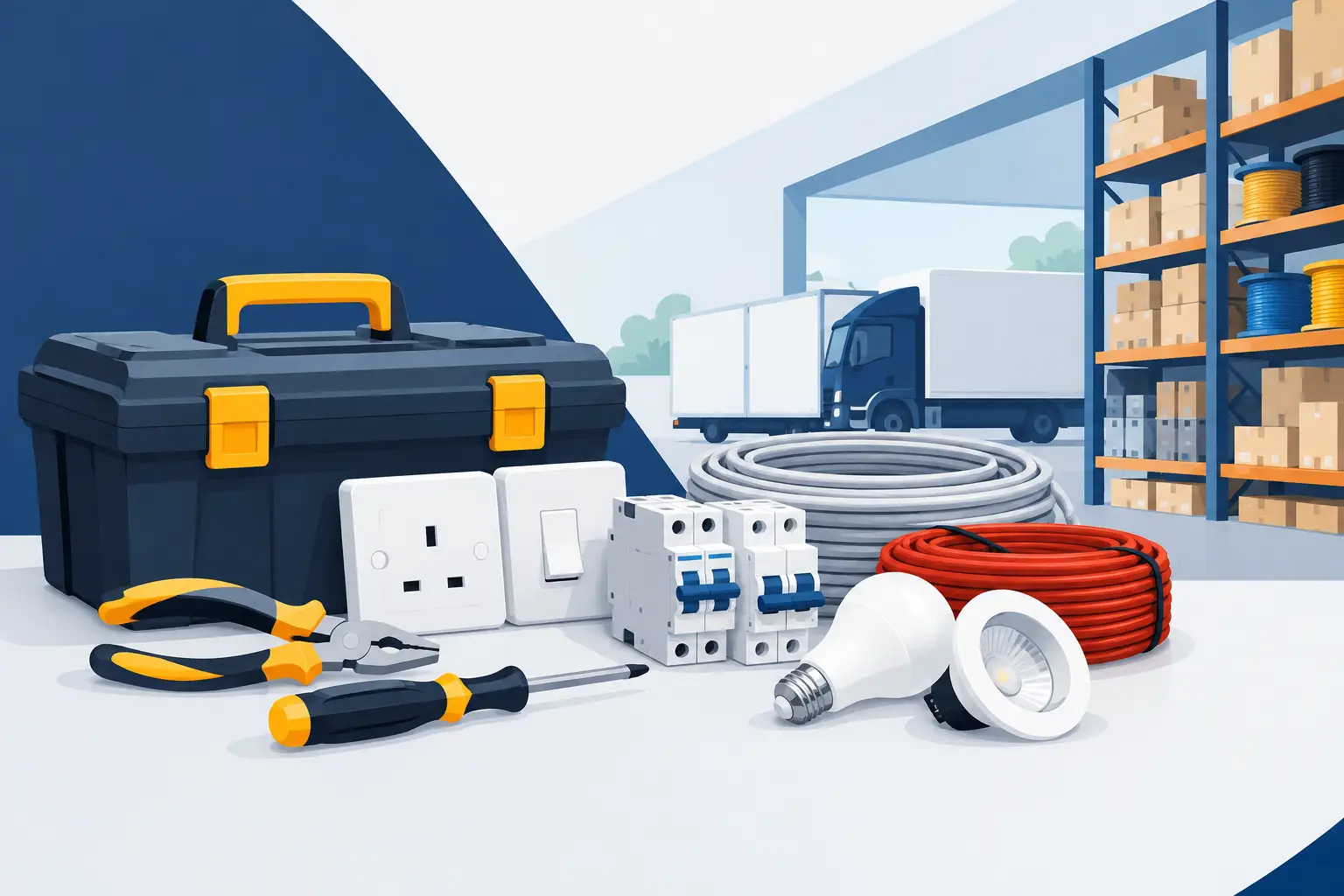

A dependable tools and electrical wholesale supplier does more than fill cartons. For retailers, distributors, importers, and traders, the right supplier helps protect margins, reduce purchasing delays, and keep fast-moving essential goods available when customers need them.
Tools and electrical accessories are practical categories with steady demand across hardware shops, supermarkets, general stores, building supply outlets, and online resale channels. Yet the category can become difficult to manage when stock is inconsistent, specifications are unclear, or orders must be placed with multiple vendors. Centralizing sourcing with an established wholesale partner gives buyers better control over cost, assortment, and replenishment.
Why supplier reliability matters in tools and electrical wholesale
A low unit price has value only when the goods arrive in the right quantities, meet the required standard, and can be reordered without disruption. Wholesale buyers often lose more through missed sales and emergency sourcing than through a slightly higher purchase price. Reliability therefore has a direct commercial impact.
For tools, demand is often driven by maintenance, repair, construction activity, household projects, and trade requirements. Electrical accessories are everyday necessities, from plugs and sockets to extension leads, bulbs, batteries, switches, adapters, and related items. A store that cannot replenish these lines risks sending regular customers elsewhere.
The strongest supplier relationships are built on consistency. Buyers should expect clear product information, practical order quantities, dependable stock planning, and responsive communication when a shipment, replacement, or new assortment requires attention. These operating details are what support repeat business over time.
What to expect from a tools and electrical wholesale supplier
The best supplier for one buyer may not be the best fit for another. A neighborhood retailer may prioritize mixed cartons and an accessible product range, while an importer may require export documentation, container-scale loading, and stable availability across recurring orders. The right choice depends on the sales channel, destination market, and purchasing volume.
Still, several capabilities should be considered before placing a significant order.
A broad, commercially relevant assortment
A useful wholesale assortment should cover more than a few isolated products. It should allow buyers to build a practical section for their customers, combining everyday essentials with value-driven items that encourage additional purchases.
In tools, this can include hand tools, measuring products, cutting accessories, hardware-related items, and workshop essentials. In electrical lines, buyers may look for lighting products, power accessories, batteries, cables, plugs, sockets, switches, and other household or trade-use items. The precise product mix should reflect local demand, customer budgets, and applicable market requirements.
Breadth matters because it reduces sourcing complexity. Instead of managing separate vendors for basic household goods, tools, and electrical accessories, a buyer can consolidate more of the order through one experienced trading partner. That can simplify purchasing administration, shipment planning, and inventory coordination.
Competitive pricing with room to trade
Wholesale pricing should support the buyer’s resale strategy, not simply appear attractive on an initial quotation. Before comparing suppliers, consider freight, customs duties, local transport, storage, expected sell-through, and the retail price customers will accept. A product that looks inexpensive at origin may not offer the strongest landed margin.
Volume pricing can create significant opportunity, particularly for distributors serving multiple outlets or export markets. However, larger orders should be balanced against stock movement. Slow-moving electrical lines, seasonal tools, or overly specialized items can tie up working capital if the assortment is not aligned with proven demand.
A reliable supplier can help buyers choose a range that balances high-volume essentials with differentiated products. This is particularly valuable for businesses entering a new market or expanding beyond a narrow hardware assortment.
Consistent stock and repeat-order confidence
First orders receive attention, but repeat orders build a business. When a product performs well, buyers need confidence that they can replenish it without changing specifications, packaging, or price structure unexpectedly.
Ask how the supplier manages regular inventory, how often key lines are replenished, and whether alternatives are available if a particular item is temporarily unavailable. For distributors, this discussion should take place before committing to promotions or supplying retail partners. A successful promotion can create pressure on stock faster than expected.
It is also wise to identify core products that should remain part of every order. A focused list of high-turning items provides a stable base, while new products can be tested in controlled quantities. This approach helps protect cash flow and gives purchasing teams better data for future buying decisions.
Quality control and product clarity
Tools and electrical goods must be represented accurately. Product dimensions, material quality, voltage requirements, packaging, country-specific standards, and intended use can affect whether an item is suitable for a buyer’s market.
Electrical products require particular care. Requirements may differ by country, and buyers are responsible for confirming that products meet relevant local regulations, safety expectations, and import requirements. A capable wholesaler can provide clearer product information and support more informed purchasing, but compliance decisions must always be made with the destination market in mind.
Samples and detailed specifications are worthwhile when placing a new bulk order. They are especially useful for private-label programs, large retail commitments, and product lines where packaging, finish, or technical compatibility will influence customer satisfaction.
Dubai’s advantage for regional and international trade
Dubai remains a practical sourcing hub for businesses serving the Middle East, Africa, Asia, and wider export markets. Its established trading ecosystem, logistics infrastructure, and international connectivity make it well suited to consolidated wholesale purchasing.
For buyers, working with a Dubai-based supplier can make it easier to combine categories into a single commercial order. A trader may source tools and electrical accessories alongside household products, cleaning supplies, kitchenware, stationery, or other fast-moving consumer goods. Consolidation can improve shipment efficiency and reduce the time spent coordinating multiple suppliers.
Fakhruddin General Trading brings more than six decades of wholesale, import-export, manufacturing, and distribution experience to this model. Its broad product portfolio supports buyers who need competitive pricing, recurring availability, and a dependable source for multi-category trade requirements.
Build a purchasing plan before you buy
A productive supplier relationship begins with a clear buying plan. Start with the customer segments you serve and the products they request most often. Review sales records where available, but also speak with store managers, sales teams, and distribution partners. Their feedback can reveal gaps that reports alone may not show.
Then separate the assortment into three groups: core replenishment lines, growth products with proven potential, and trial items. Core lines should receive the largest share of purchasing budget because they support predictable sales. Growth products can broaden the offer without creating unnecessary risk. Trial items should be ordered in quantities that allow the market to respond before a larger commitment is made.
Consider packaging and display requirements as part of the decision. Retail-ready packaging may be important for a self-service store, while bulk packaging can be more appropriate for trade counters or downstream distributors. The same product can serve different channels, but the packaging format should match how it will be sold.
Questions that strengthen supplier discussions
Commercial conversations are more productive when buyers are specific. Share the destination market, expected order frequency, preferred price range, product categories, and approximate volume. This helps the supplier recommend a more relevant assortment rather than offering a generic catalog selection.
Ask about minimum order quantities, lead times, packing methods, export capabilities, documentation, and options for mixed-category orders. If private-label opportunities are relevant, discuss branding requirements, packaging development, and expected production volumes early. These details affect both cost and delivery schedules.
For established distributors, it is also helpful to discuss future demand rather than only the next purchase order. A supplier that understands the direction of your business can plan more effectively for repeat supply and category expansion.
Choose a partner that supports your next order too
The value of a wholesale partner is measured over repeated cycles of purchasing, delivery, replenishment, and growth. Look for competitive prices, but also assess the supplier’s experience, product depth, communication standards, and ability to support your market as demand changes.
A carefully selected tools and electrical wholesale supplier can help turn a routine purchasing category into a dependable source of sales. Start with the products your customers already trust, test new lines with discipline, and build the relationship around clear requirements and repeatable results.