
A household goods buyer loses time and margin every time an order must be split across multiple suppliers. One vendor has cleaning items, another has kitchenware, and a third carries basic home accessories – each with separate pricing, minimums, delivery schedules, and stock risks. Knowing where to buy wholesale household goods is therefore less about finding the lowest unit price on one product and more about choosing a supply partner that can support repeat business.
For wholesalers, retailers, distributors, and importers, the right source should provide a broad assortment, dependable availability, competitive wholesale pricing, and the experience to manage volume orders. This is particularly important when serving varied customer groups or exporting into multiple markets, where demand can change quickly by season, location, and price point.
Where to Buy Wholesale Household Goods for Resale
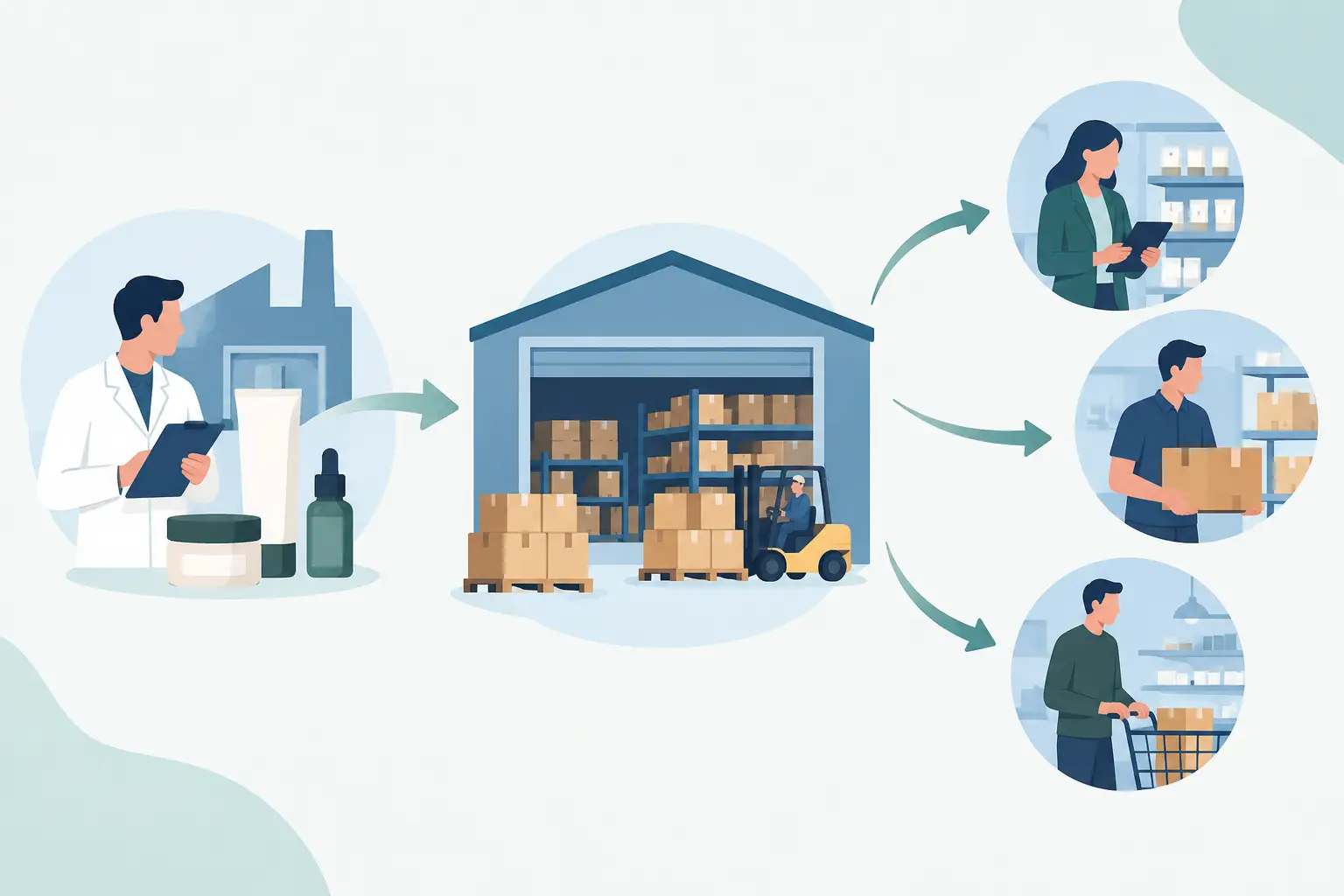
The most dependable place to buy wholesale household goods is from an established wholesale trading company that carries multiple product categories and has a proven distribution network. A centralized supplier reduces purchasing complexity while giving buyers more control over their assortment, shipment planning, and replenishment schedule.
A capable household goods wholesaler should supply everyday merchandise that moves consistently through retail channels. Depending on the market, this may include cleaning tools and supplies, food storage products, kitchen utensils, plasticware, bathroom accessories, laundry items, home organization products, small utility goods, and seasonal household lines.
Buying from a specialized trading house is often more efficient than sourcing individual products directly from many factories. Direct factory purchasing can work well for importers with high volumes, clear specifications, and the ability to manage quality inspections, production lead times, and freight. However, it may require large minimum order quantities for every SKU. For many traders and retailers, a wholesale supplier with ready stock offers greater flexibility and faster access to a sellable range.
Dubai remains a practical sourcing center for businesses serving the Middle East, Africa, Asia, and international markets. Its trading infrastructure, shipping connectivity, and concentration of import-export businesses make it well suited to buyers that need mixed-category orders and export coordination. For U.S.-based buyers, Dubai can also be a valuable sourcing hub when purchasing products manufactured across Asia and consolidating a broad order through one regional supplier.
Look Beyond Price Per Carton
Price matters in wholesale, but the cheapest quotation does not always produce the best commercial result. A low unit cost can be offset by inconsistent product quality, unavailable replenishment stock, high freight costs, damaged packaging, or a supplier that cannot fulfill a follow-up order.
Evaluate the full landed and operating cost of the relationship. Ask whether the supplier can maintain reasonable stock levels, provide clear product details, prepare export documentation when required, and consolidate goods from multiple categories into a manageable shipment. These capabilities help protect your margin after the order leaves the warehouse.
Product presentation also affects resale performance. Household goods are frequently impulse or routine purchases, so packaging, shelf appeal, practical features, and price positioning all matter. A strong supplier should offer merchandise across entry-level, mid-market, and value-added segments, allowing you to build an assortment that fits your own customer base.
What to Check Before Choosing a Wholesale Supplier
Before placing a significant order, review the supplier as carefully as you would review the merchandise. Established wholesalers build their reputation through consistent fulfillment, not simply a large catalog.
Start by confirming category depth. A supplier may list household goods but only carry a narrow selection of slow-moving products. Ask for the available range within the categories most relevant to your business, including size options, materials, colors, brands, and price levels. A deeper selection gives you better control over assortment planning and makes it easier to test new lines without opening accounts with additional vendors.
Next, discuss minimum order quantities and ordering flexibility. Some businesses need full-container volumes, while others need mixed cartons for retail stores, regional distribution, or market testing. There is no single right model. The important point is to work with a supplier whose order structure supports your current scale while leaving room for growth.
Inventory reliability deserves equal attention. Request clarity on what is available for immediate shipment, what requires replenishment, and how often popular lines are restocked. Fast-selling basics such as cleaning accessories, storage products, and kitchen tools can create lost sales when they are unavailable at the moment your customers need them.
Finally, assess the supplier’s experience with your destination market. Exporting household goods may involve labeling expectations, carton markings, customs paperwork, freight coordination, and product standards that differ by country. A supplier with established international trade relationships can help make the purchasing process more predictable.
Build a Household Range That Customers Return For
A profitable household goods range combines dependable essentials with selective newness. Everyday products generate recurring demand, while attractive additions give retailers and distributors a reason to refresh displays and encourage repeat orders.
Start with the items your customers replace often. Cleaning products and tools, kitchen consumables, storage solutions, and basic home utility items generally provide a stable foundation. Then add products that respond to specific selling occasions, such as back-to-school organization, Ramadan and holiday entertaining, moving season, or home refresh promotions.
Avoid building a range based only on personal preference. Review what sells in your own channels, identify gaps in your current offer, and set target price points before ordering. A discount retailer may need high-volume value products in simple packaging, while a homewares store may prioritize better finishes, coordinated colors, and higher perceived value. The same supplier should ideally be able to support both approaches.
It is also wise to balance recognized brands with private-label or value-oriented lines. Known brands may help build shopper confidence, while private-label goods can create better margin opportunities and differentiate your assortment. The right mix depends on your market, competitor pricing, and the level of brand recognition your customers expect.
Questions to Ask Before You Place Your First Order
A productive supplier conversation should cover more than a price list. Ask about the availability of your priority items, carton quantities, lead times, payment terms, and whether mixed-category orders can be consolidated. Confirm how products are packed for transit and whether the supplier can support the shipping method you intend to use.
For importers and distributors, request complete product information early. Dimensions, materials, carton measurements, product codes, country of origin, and packaging details are essential for freight estimates, warehouse planning, customs processing, and accurate resale listings. If you are purchasing for multiple outlets or customers, ask whether stock can be allocated or replenishment orders can be planned in advance.
It is also useful to begin with a controlled order when entering a new category or market. A test order can show how the supplier communicates, how the goods arrive, and which products gain traction with your buyers. Once demand is proven, larger recurring orders can be planned with greater confidence.
A Centralized Wholesale Partner Supports Growth
As a business expands, fragmented purchasing becomes harder to manage. More suppliers can mean more invoices, more deliveries, more stock discrepancies, and less visibility over purchasing costs. A one-stop wholesale partner simplifies this process by bringing related product categories under one commercial relationship.
Fakhruddin General Trading supports wholesalers, retailers, importers, and distributors with a wide portfolio of household and consumer goods, competitive pricing, and established distribution experience across international markets. With more than six decades in trading, the company is positioned to serve buyers who need dependable access to merchandise at volume rather than one-time purchasing.
The best sourcing decision is one that makes the next order easier than the first. Choose a wholesale household goods supplier that understands your target market, keeps essential products moving, and has the scale to support your business as demand grows.